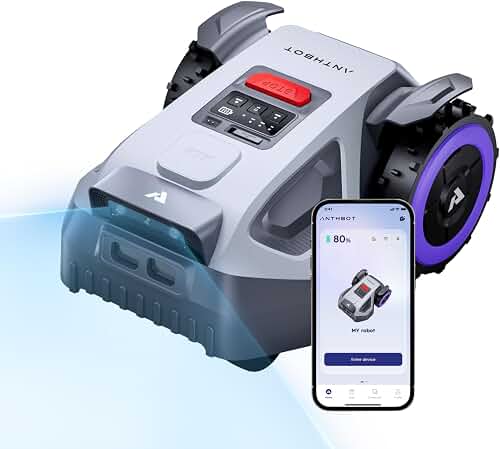
If your HOA enforces neutral color aesthetic rules, the best robot mowers for hoa neutral color aesthetic restrictions are models finished in muted earth tones (charcoal, slate gray, matte black, taupe, or olive), with low-profile chassis, recessed branding, and discreet charging docks that blend into mulch beds, hedges, or stone borders. You want a unit that looks like landscape equipment, not a neon toy. Prioritize matte finishes over glossy plastic, avoid bright safety oranges and lime greens, and confirm the charging station can be tucked behind shrubs. This guide walks through what HOA architectural review committees actually flag, which finishes pass without a variance, and how to position the dock so the entire installation reads as intentional landscape design rather than a rogue gadget.
Robot mowers are increasingly common in covenant-controlled communities, but architectural committees still scrutinize visible equipment under "exterior alterations" and "yard appliance" clauses. The good news: the manufacturers most committee members will recognize already lean into subdued palettes. The bad news: a handful of popular consumer models ship in bright, attention-grabbing colors that almost guarantee a violation letter. Choosing among the best robot mowers for hoa neutral color aesthetic restrictions means filtering on appearance first, then on cutting capability second, because a $3,000 mower that gets banned at the next board meeting is worse than a $1,200 mower that quietly does its job for a decade.
What HOA Architectural Committees Actually Flag
Before you shop, read your covenants. Most HOAs that regulate aesthetic conformance fall back on three recurring phrases: "earth tones," "non-reflective finishes," and "equipment shall not be visible from the street." These three phrases drive almost every robot mower complaint. A glossy white robot zipping across a front lawn at dusk catches headlights and reads as out of place. A satin charcoal unit doing the same job at the same time is essentially invisible to a passing car.
The second flag is the charging dock. Even when the mower itself is neutral, an exposed dock with a bright LED status ring or a tall vertical mast violates "equipment screening" rules in many communities. You'll want a low-profile dock that sits below the height of typical landscape edging (around 6 inches) and ideally one you can tuck behind a juniper, boxwood, or decorative rock cluster.
Third, committees flag perimeter wire when it's visible at the surface. Buried boundary wire is invisible; surface-pinned wire eventually surfaces through frost heave and grass growth, and it photographs poorly in compliance audits. Either bury the wire properly or consider a wire-free GPS/RTK model — both are addressed in our wire-free robot mower guide.
Color Palettes That Reliably Pass HOA Review
From reviewing dozens of architectural standards documents across master-planned communities, the safest robot mower color families are:
- Matte charcoal or graphite gray — reads as "equipment," disappears against asphalt edging and dark mulch.
- Satin black — most premium European brands default to this. Pairs with wrought-iron fencing and dark trim packages.
- Slate or stone gray — blends with natural stone borders and concrete pavers.
- Olive or muted bronze — works against shrub beds and hardwood mulch.
- Taupe or warm gray — best for desert landscapes and Mediterranean-style communities.
Colors to avoid in a strict HOA: signal orange, safety yellow, lime green, white, glossy red, or any two-tone scheme with high-contrast accent panels. Even if the body is neutral, oversized bright logos or reflective decals can trip a complaint. Some owners apply a thin matte vinyl wrap to logos to mute branding — check your warranty terms first.
How to Evaluate a Mower's Aesthetic Footprint
Beyond raw color, look at three design cues that determine how "residential" a mower reads:
Profile height. The lower and longer the unit, the more it reads as landscape equipment rather than a toy. Mowers under 11 inches tall almost disappear behind decorative grasses. Taller, dome-shaped units stand out.
Surface finish. Matte and satin finishes scatter light and recede visually. Glossy finishes reflect sky and headlights and pop against grass. Always choose matte where available.
Dock design. Flat "sled" docks with the contacts at ground level are nearly invisible from 15 feet away. Tall vertical docks with charging masts are essentially a small obelisk in your yard — committees notice them.
For broader buying criteria beyond aesthetics — cutting deck width, slope handling, lawn size — work through our full robot lawn mower buying guide after you've narrowed your aesthetic shortlist.
HOA-Friendly Robot Mower Categories
Premium European Models (Husqvarna, Gardena, Stihl)
European brands historically design for tight residential lots in historic districts where aesthetic regulation is even stricter than American HOAs. The result: muted gray-and-black color schemes, low-slung profiles, and minimal exterior branding. Husqvarna Automower units in particular use a charcoal/dark gray palette that reads as professional grounds equipment. Gardena (Husqvarna's sister brand) uses a turquoise accent on some models that some committees flag — verify the specific model's accent panels before purchasing.
For a deeper look at this category, see our Husqvarna Automower 430X review and Gardena Sileno City review.
Mid-Range GPS/RTK Wire-Free Models
Newer GPS and RTK boundary models eliminate the perimeter wire problem entirely, which addresses one of the top three HOA flags. Segway Navimow, Ecovacs Goat, and similar models come in subdued gray-and-black finishes and use compact docks. Verify the antenna mast height — RTK reference stations sometimes ship with a tall pole that needs hiding, though most can be wall-mounted on a shed or fence.
See our Segway Navimow i105 review and Ecovacs Goat G1 review for category specifics.
Budget Wired Models
The budget tier (Worx Landroid, lower-end Robomow) skews toward bolder colors. The Worx Landroid family in particular uses signal orange, which is a near-automatic HOA violation in strict communities. If budget is the binding constraint, look for the matte black accessory shroud or consider a vinyl wrap — but check warranty terms. Some board members have approved orange models when the owner agreed to operate only during specified daytime hours when the unit is less visually disruptive. Browse our best budget robot mowers roundup to weigh trade-offs.
Dock Concealment Strategies That Satisfy Boards
Even a perfectly neutral mower can fail review if the dock is exposed. Strategies that typically pass:
- Shrub screening: Plant a low boxwood or dwarf juniper hedge 12-18 inches in front of the dock. The mower exits and returns through a gap; the dock itself is invisible from the street.
- Side-yard placement: Locate the dock on a side fence line where front-facing sightlines never reach it. This requires programming the mower's path planning carefully.
- Garage interior with cutout: Some owners install the dock just inside the garage with a small dog-door-style mower opening cut into the garage door. This is the gold standard but requires structural modification — itself often subject to HOA review.
- Decorative stone surround: Build a low fieldstone wall around the dock matching existing yard hardscape. The wall reads as intentional landscape design.
The garage-interior approach also addresses winter storage. For seasonal storage detail, see our guide to winterizing a robot lawn mower.
Noise and Operating Hours: The Other HOA Concern
Aesthetic rules and noise rules often appear in the same covenant section. Most robot mowers run at 55-65 dB — significantly quieter than gas mowers, but still audible. Some HOAs restrict any motorized yard equipment outside daylight hours, which kills the main scheduling advantage of a robot mower (overnight runs while the lawn is empty).
Check your covenants for explicit "powered equipment" hour restrictions. If your community allows quiet equipment outside standard hours, robot mowers usually qualify — but get this confirmed in writing from the management company before installing. Match your schedule to allowed windows, and consider a model with strong scheduling granularity so you can avoid neighbor-facing hours.
The Approval Conversation: How to Pre-Empt a Violation Letter
Don't install first and ask later. The smartest move is to submit a brief architectural review request before purchase, with:
- A photo of the specific mower model in your intended yard location (manufacturer marketing photos work).
- A site plan showing the dock location and proposed screening.
- A noise specification sheet (manufacturers publish dB ratings).
- Your operating schedule, demonstrating compliance with quiet-hour rules.
This shifts the conversation from "reactive enforcement" to "collaborative approval" and creates a paper trail protecting you if a neighbor complains later. Many committees approve robot mowers explicitly once they see the documentation, and some communities have started writing robot-mower-friendly amendments into their CC&Rs.
Frequently Asked Questions
Are robot lawn mowers usually banned by HOAs?
No — outright bans are rare. What's common is aesthetic, noise, and screening requirements that effectively limit which models work. Most HOAs that initially question robot mowers approve them after seeing manufacturer documentation showing the muted color palette, low decibel rating, and compact dock footprint. The denials we see almost always involve bright-colored units (orange, lime), exposed surface wire, or tall charging masts visible from the street.
What color robot mower is least likely to trigger an HOA complaint?
Matte charcoal gray and satin black are the safest. They read as "professional groundskeeping equipment" and recede visually against mulch, asphalt, dark fencing, and shadow. Avoid any model with high-contrast accent panels — even a neutral body can be flagged if it has bright trim. If you must buy a brighter unit because it's the only option in your budget or yard size, plan on a matte vinyl wrap or aggressive shrub screening around the dock.
Can I hide a robot mower charging dock in a flower bed?
Yes, and this is the most common approval-friendly placement. The dock needs a clear approach path (no plants within about 12 inches of the front contacts), level ground, and protection from sprinkler overspray. A low boxwood or ornamental grass planting in front of the dock will conceal it from street-level sightlines while letting the mower enter and exit. Use a stone or mulch pad under the dock to prevent grass growth that interferes with contacts.
Do GPS/RTK robot mowers solve the HOA wire visibility problem?
Yes. Models that use GPS or RTK satellite positioning eliminate perimeter wire entirely, which removes one of the three top HOA flags. You still need to manage dock placement and mower color, but you skip the wire-burying or wire-pinning headaches. The trade-off is higher upfront cost and dependence on clear satellite reception — yards heavily shaded by mature trees may struggle.
Will my HOA notice a black robot mower running at night?
Almost never. A matte black or charcoal unit operating after dusk is essentially invisible from the street. The bigger nighttime concern is noise: even at 55-65 dB, motor hum can carry across quiet suburban streets and prompt complaints from neighbors. Check your covenant's quiet-hours clause before scheduling overnight runs, and consider stopping operation by 10 PM as a courtesy regardless of what the rules technically allow.
Do I need HOA approval to bury the perimeter wire?
Usually no, because once buried the wire is invisible. However, some HOAs treat any landscape modification including trenching as a reviewable alteration. Read your covenants for "underground installations" language. If your community uses common-area irrigation or shared utility easements, also call 811 before trenching. For installation specifics see our robot mower installation guide.
What if my HOA still rejects my robot mower after I follow all these tips?
Request a written denial citing the specific covenant section. Many denials are based on board member preferences rather than enforceable language, and a written denial often leads to either reversal or a covenant amendment. If the denial is well-grounded, ask for conditional approval with specific mitigations — operating hours, dock screening, color modification — that address the board's concern. Robot mowers are still novel in many communities, and most boards will work toward a solution rather than a hard no.
Final Recommendations
For strict HOA communities, prioritize satin-black or charcoal models from Husqvarna, Gardena, or the muted-finish GPS/RTK options. Plan dock placement before you buy, photograph the proposed installation, and submit it to the architectural committee with manufacturer documentation. Done correctly, a quiet matte-finish robot mower disappears into the landscape — and the only sign that you own one is a perfectly manicured lawn that never seems to need cutting. For final-stage decision criteria across all features see our how to choose a robot lawn mower walkthrough.