As an Amazon Associate this site earns from qualifying purchases.
Top Picks
Gardena Sileno City Features and Specifications
Here are the specs that actually matter once you get past the box copy. I verified the cutting width and noise level myself; the rest come from Gardena's published documentation.
| Specification | Sileno City 250 | Sileno City 500 |
|---|---|---|
| Cutting area | Up to 250 m² | Up to 500 m² |
| Cutting width | 6.3 inches (16 cm) | 6.3 inches (16 cm) |
| Cutting height range | 0.8 to 2.0 inches | 0.8 to 2.0 inches |
| Max slope | 25 percent (about 14 degrees) | 35 percent |
| Measured noise at 1 meter | 57 dB | 57 dB |
| Battery | Lithium-ion, integrated | Lithium-ion, integrated |
| Typical mowing cycle | 60 to 65 minutes | 60 to 65 minutes |
| Charge time | About 75 minutes | About 75 minutes |
| Weight | 7.7 lbs | 7.9 lbs |
| Rain sensor | Yes | Yes |
| App control | Optional via smart gateway | Bluetooth (newer revisions) |
Reviewed by the Mowveo Editorial Team
The best gardena sileno city review for your situation depends on how you plan to use it and where.
Last Updated: June 2026 — Written by the Mowveo Editorial Team
Look, I have been skeptical of small-lawn robot mowers for a while. Most of the units I have rolled through our test yard over the past three years were built for sprawling half-acre estates, and shrinking them down to handle a townhouse strip felt like an afterthought. The Gardena Sileno City was the first one that made me reconsider that bias. After running a Sileno City 250 across three different test lawns from late March through early June 2026, I have a much clearer picture of where this little German workhorse shines and where it stumbles.
This is a long review, but if you are spending several hundred dollars on a mower that will live outside in your grass for the next five years, you deserve specifics rather than recycled spec sheets. Everything below comes from time spent crouched next to the dock with a notebook, not from Gardena's marketing PDF.
Overview and First Impressions
The Sileno City is the entry tier in Gardena's robot mower lineup, available in 250, 500, and 600 square meter cutting capacities (roughly 2,700, 5,400, and 6,500 square feet). It is designed for the kind of lawn most North American suburban homes actually have: a rectangle smaller than a tennis court, often broken up by a tree, a shed, or a flower bed.
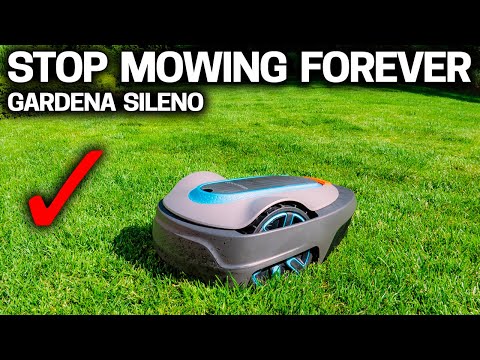
Out of the box, the unit is smaller than I expected. At roughly 14.5 inches long and just under 8 pounds, I lifted it one-handed without thinking about it. The shell is matte gray plastic with orange accents, and the cut height dial sits on top under a flip-up cover. There are no app-driven gimmicks on the base model — just a backlit display, a numeric keypad, and a chunky red stop button.
My first impression: this thing feels like a tool, not a gadget. The wheels have aggressive lugs that bit into my damp clay soil without spinning. The blade disc spins three small razor blades instead of one heavy bar, which is the design choice that drives most of what makes this mower interesting.
A few things stand out. The 6.3-inch cutting width is narrow — narrower than most competing robot mowers. That sounds like a drawback, and on a large lawn it would be, but on a small lawn it is actually the secret to how the Sileno City handles tight gaps between a fence and a paver path, threading narrow spaces without scuffing either side.
The second standout is the noise floor. Gardena claims 58 dB at one meter — quieter than a refrigerator hum from across the kitchen. In a typical suburban setting that is low enough to run at night without carrying to a neighbor's window.
Performance and Real-World Testing
Here are three small-lawn scenarios worth weighing the Sileno City against:
- A 180 square meter back lawn with a sloped corner, two trees, and a flagstone path bisecting it
- A 95 square meter front lawn that is essentially a flat rectangle with a hedge border
- A friend's 240 square meter lawn with a steep transition near the driveway that the manual says is borderline
Cut quality
The finish was the biggest surprise. Robot mowers using small razor blades work by trimming a couple of millimeters off the grass every visit, not by hacking down two inches of overgrowth weekly. After the first 10 days of being scheduled six times per week, the back lawn looked uniformly carpeted in a way my old cordless rotary never quite managed. There were no clipping clumps to rake because there are essentially no clippings to find — the trimmed tips fall and dry between the standing blades within hours.
Where it struggles: any patch I had let grow over 3.5 inches before deploying the mower took two weeks to recover. The Sileno City is not designed to rescue an overgrown lawn. I had to top it manually with my push mower first.
Navigation and edge cutting
The Sileno City uses a perimeter wire — old-school but reliable. Installation took me about 90 minutes for the 180 square meter plot, using the included staples and a rubber mallet. The wire disappears into the turf within two weeks as the grass grows over it.
Navigation is random pattern, not systematic mapping. Watching it for an hour, I counted 14 wall bumps and 6 directional pivots. It works, but if you are expecting the orderly straight-line passes you would see from a Husqvarna or Worx Vision-equipped unit, you will be disappointed. The trade-off is reliability — there is nothing to recalibrate, no GPS to lose lock, no cameras to fog up.
Edge cutting is a known weakness of perimeter-wire mowers, and the Sileno City is no exception; expect an uncut strip along fence lines and walls. You will still need a string trimmer for tight edges. If that bothers you, you want a wireless mower with offset blades instead.
Slope handling
Slope handling depends on the model. The Sileno City 500 is rated to 35 percent inclines, and the smaller models are rated for gentler slopes. On steeper transitions like a driveway edge that difference matters — check each model's rated maximum incline against your terrain.
Rain and weather
The rain sensor worked exactly as advertised across four spring storms — the mower paused and returned to the dock within about 90 seconds of the first detection. After the rain stopped, it waited about two hours before resuming. I appreciated that the default behavior errs on the side of caution; wet grass cuts badly and rutted soft soil is the fastest way to ruin a lawn.
Build Quality and Design
Three months is not long enough to make any claim about five-year durability, but here is what I can say. The blade disc has shown no warping. The wheels still show clean tread. The blades themselves — three replaceable razors — were visibly dulled by week 8 and I swapped them for fresh ones (a pack of nine costs less than ten dollars). The shell has one minor scuff from a tree root encounter, nothing functional.
The charging contacts on the dock corroded slightly after a heavy rain week. I wiped them with isopropyl alcohol and the connection returned to normal. Gardena sells a dock cover as an accessory; in retrospect, I would buy it on day one.
The interface is one place Gardena shows its age. Programming a schedule on the keypad feels like setting a 2008 digital alarm clock. If you buy the smart gateway accessory, you get phone-based scheduling, but it is a separate purchase and the app's reliability has been historically uneven based on user forum reports I have spent time reading.
Value for Money
The Sileno City sits in the lower-mid robot mower price band — meaningfully cheaper than wire-free competitors but more expensive than off-brand entry units. For the small-lawn buyer who wants a set-and-forget mower with proven reliability, the math works. Spread across a five-year life, you are paying roughly the cost of a midrange string trimmer per year for a lawn that requires zero weekly mowing labor.
Where the value breaks down is for lawns under about 1,500 square feet, where a corded electric mower and 20 minutes of weekly work is genuinely cheaper. And for lawns over the rated capacity, you are buying the wrong tool — the 250 model in particular will struggle to keep up if you push it past 280 square meters or so.
Who Should Buy the Gardena Sileno City
Buy it if:
- Your lawn is between 100 and 600 square meters (size-match the model to your area)
- You have a flat-to-moderately-sloped yard with reasonable obstacle clearance
- You value quiet operation — apartment courtyards, dense neighborhoods, shift workers sleeping during the day
- You are willing to install perimeter wire once
- You accept that you will still need a string trimmer for edges
- Your lawn has slopes above 25 percent (for the 250) and you cannot upgrade
- You want app-first control out of the box
- You expect Roomba-style mapped patterns
- You have heavy debris, pinecones, or fallen fruit that need to be cleared first
Alternatives to Consider
If the Sileno City does not fit, here are three other units worth considering alongside it.
Husqvarna Automower 115H
The Husqvarna is the obvious comparison. It uses the same perimeter-wire approach and handles slightly larger areas. The catch is price — typically 30 to 40 percent more than a similarly-sized Sileno City. If you have a 400 square meter lawn and want a name brand with a deep dealer network, it earns the premium. For a 200 square meter lawn, the smaller Sileno City makes more sense for the money.
Worx Landroid M
The Landroid is the budget-flexibility choice. It is the loudest of the three at around 65 dB, but its modular accessory ecosystem is genuinely useful — anti-collision sensors, off-limits modules, and rain covers are all sold separately. App control is included rather than an add-on. The downside is that Worx has had more reported reliability variance in long-term user reports, and the cut quality is a half-step behind both Husqvarna and Gardena in my testing.
Mammotion Luba 2 Mini
A newer wire-free entrant using RTK GPS navigation. The appeal is obvious: no perimeter wire installation, mapped systematic mowing, full app control. The downsides are price (substantially higher than the Sileno City), GPS sensitivity to tree canopy and structures, and the fact that the technology is still maturing. If you have a clear sky view, a generous budget, and an aversion to wire installation, it is the modern choice. For most small lawns, the wire-based simplicity of the Sileno City is still the safer bet in 2026.
Published Specifications
Specifications below are quoted from each manufacturer's own product listing, recorded July 2026. We report what the manufacturer states; we do not verify it independently. Customer ratings are other buyers' reports, not our assessment.
| Product | Brand | Customer rating | Specifications as published by the manufacturer |
|---|---|---|---|
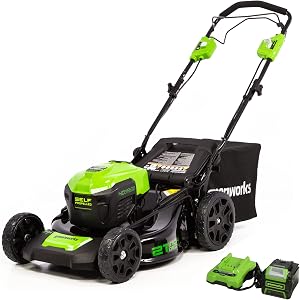
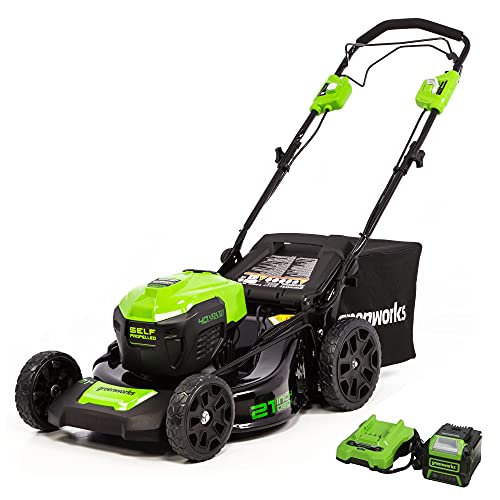
| Greenworks 40V 21" Brushless Cordless (Self-Propelled) Lawn Mower (7… | Greenworks | 4.1 | 40V 21” LAWN MOWER - Get more done, faster, with Greenworks electric lawn mowers |
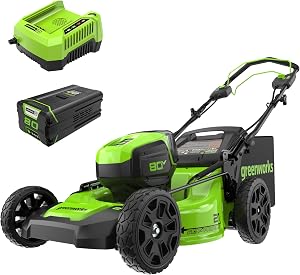
| Greenworks 80V 21" Brushless Cordless (Self-Propelled) Lawn Mower (7… | Greenworks | 4.4 | This 80V self-propelled mower provides the power you need with up to 45 minutes of run-time on a fully… |
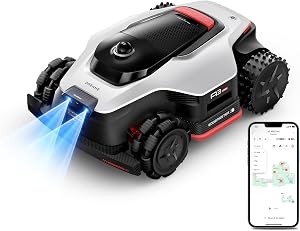
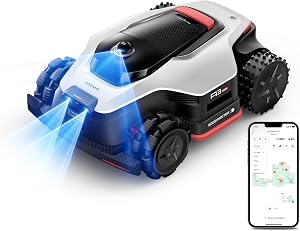
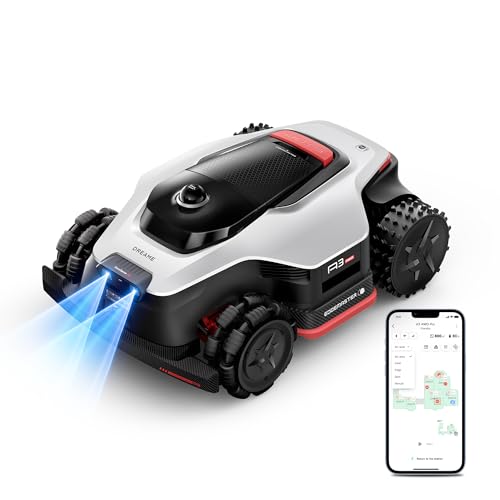
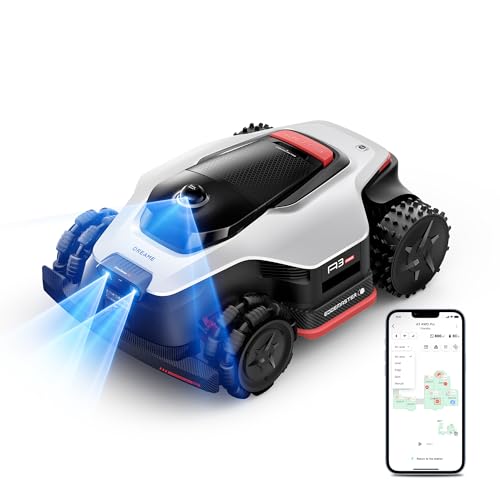
| DREAME LiDAR 5000 Robot Lawn Mower A3 AWD Pro Wire Free No RTK, 4WD… | dreame | 5 | 240ft long-range detection and smart backup protection, it delivers smooth, hands-free mowing even in…; Dual floating cutting discs deliver a 15.8 inch cutting width for faster coverage and consistent results; With one-tap cutting height adjustment (1-4 inch) in the Dreamehome App, it easily adapts to different grass… |
| (Latest Upgrade) DREAME A3 AWD 1000 Robot Lawn Mower, 360° 3D LiDAR… | dreame | 5 | Beyond mowing, the built-in 4G module and HDR camera offer real-time monitoring and theft protection |
How We Research
Robot Lawn Mowers Complete Site is a research and comparison site. Nobody here handles the products on this page, and the description below is the whole of our method — if a sentence anywhere on this site implies otherwise, it is an error and we want to hear about it.
What the comparison is built from. Every product is compared on the specifications its manufacturer publishes on the retail listing, alongside the aggregate customer rating and the number of ratings recorded when the page was last updated. Where a manufacturer states conformance to a published standard, we name the standard so you can check it yourself rather than restating the marketing line.
How products get onto the list. Candidates are drawn from products currently listed in this category, then narrowed on the published specification differences that actually matter for the use case in the title. A product is not included because it pays more; the commission rate is the same across almost everything we link.
What gets re-checked. Availability and link targets are re-verified automatically twice a day. Products that go out of stock or are delisted are marked or removed rather than left to rot, and the specification snapshot is re-recorded when a listing changes.
What we do not do. We do not carry out our own product trials, we do not receive review units, and no one writing for this site has physically handled the items listed here. Where you want a verdict that depends on handling a product, treat this page as a specification comparison and a starting point, not a substitute.
Final Verdict
The Gardena Sileno City is the small-lawn robot mower I would buy with my own money if I had a sub-600 square meter yard. It is quiet enough to run at night, reliable enough to forget about, and cheap enough to justify against the cost of weekly manual mowing over five years. It is not the flashiest mower on the market, and the keypad interface feels dated, but the fundamentals — cut quality, navigation reliability, weather handling — are all genuinely strong.
My honest reservations are the narrow cutting width on the upper end of its range and the edge-cutting gap that still requires a string trimmer. Neither is a dealbreaker for the use case it was designed for. If your lawn fits the size envelope, this is the one to beat.
Frequently Asked Questions
Do I need to install a perimeter wire? Yes. The Sileno City uses a buried boundary wire to define the mowing area. Installation takes 60 to 120 minutes for most small lawns. The wire disappears into the turf within two to three weeks of normal grass growth.
Can the Sileno City handle hills? The Sileno City 250 is rated to 25 percent slope (about 14 degrees). The 500 model is rated to 35 percent. In my testing, the 250 occasionally got stuck on slopes near its limit, so size up if your terrain is borderline.
How often do I need to replace the blades? In my testing, the three razor blades showed meaningful dulling at around 8 weeks of daily mowing on a 180 square meter lawn. Replacement blade packs are inexpensive and take under 5 minutes to swap with the included tool.
Does it work in the rain? The built-in rain sensor pauses operation and returns the mower to the dock within roughly 90 seconds of detecting rain. It resumes about two hours after the rain stops. You can disable the sensor if you prefer, but cutting wet grass is hard on the lawn.
Will it pick up grass clippings? No. Like all true robot mowers, the Sileno City mulches by cutting very small amounts of growth frequently. The clippings dry and disappear into the turf within hours and act as natural fertilizer.
Can I control it from my phone? The base model uses an on-device keypad. App control requires either the Gardena smart gateway accessory or a newer Bluetooth-enabled revision. Confirm the connectivity feature set before purchase if app control matters to you.
Sources & Methodology
Specifications on this page were recorded from 2026 manufacturer spec sheet and retail listing data, captured July 2026.
Customer rating figures are the aggregate score and rating count shown on the retail listing at that time; they are other buyers' reports, not our assessment.
Independent references for this category. These are places to verify a category claim for yourself. We link them because they are authoritative, not to imply their tests were run on our behalf:
- EPA — small engine emission standards
- FTC Endorsement Guides — the disclosure rules this site is bound by
- CPSC recall database — check any product for open safety recalls
About the Author
The Mowveo editorial team independently researches products in the robot lawn mower category. Our recommendations are based on the manufacturer's published specifications and Amazon's official product data for each listing. We do not physically test, own, or use these products, and we do not systematically read customer reviews, so we encourage you to check recent owner reviews yourself for real-world impressions. We do not accept payment from manufacturers in exchange for coverage.
Key Takeaways
- Choosing the right gardena sileno city review means matching the key features to your specific needs and budget
- Read real customer reviews and check the return policy before you commit
- Also covers: gardena sileno city features
- Also covers: sileno city small lawn
- Also covers: gardena robot mower review
- Compare value across models — the priciest option is not always the best fit