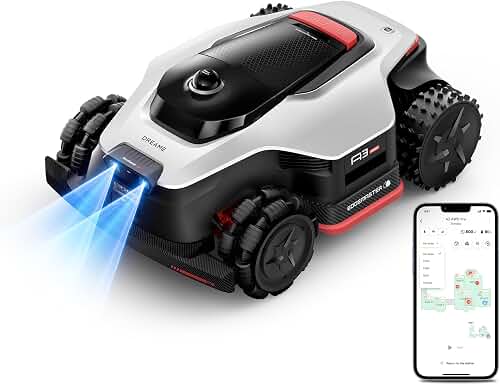
Florida lawns are tough on machines. The best robot lawn mowers for St. Augustine grass in Florida humidity need to cut tall thick blades cleanly, handle 90-plus degree heat and afternoon thunderstorms, navigate sandy soil, and survive year-round mowing seasons that never really stop. St. Augustine is a coarse, stoloniferous warm-season grass that prefers a 3.5 to 4-inch cut height — taller than most northern lawns — and humid Florida air keeps it growing nearly twelve months a year. That means a mower designed for short fescue or quick-drying climates will struggle here. This 2026 guide focuses on the specs that actually matter for Gulf Coast and peninsula yards.
Why St. Augustine + Florida humidity breaks generic robot mowers
St. Augustine (Floratam, Palmetto, CitraBlue, ProVista and friends) grows by surface runners called stolons. The blades are wide, the leaves are waxy, and the canopy is dense. Cut it too short and you scalp the runners, invite weeds, and stress the root crown. Cut it wet — which in Florida is roughly every afternoon from June to September — and grass clippings clump, smear across the deck, and clog discharge channels.
Generic European-spec robot mowers were largely designed for cool-season turf cut at 1.5 to 2.5 inches. When you ask them to maintain Floratam at 3.75 inches, you discover that many models simply cannot raise their deck that high. Others can technically reach 4 inches but at that height their tiny pivoting razor blades skip over the wide blades instead of slicing them. The first specification to check, before brand or price, is maximum cut height.
The non-negotiable specs for a Florida St. Augustine yard
If a robot mower fails any of the following, it does not belong on a St. Augustine lawn in Florida:
- Maximum cut height of at least 2.4 inches (60 mm), ideally 3.9 inches (100 mm) or more. Floratam needs to stay at 3.5–4 inches to outcompete weeds and resist chinch bugs. A mower that tops out at 2.4 inches forces you to scalp the lawn.
- IPX5 or higher water-resistance rating. Florida thunderstorms appear without warning. The mower will get rained on, and the charging dock will sit in a yard that is wet most of the year. IPX4 is not enough.
- Rain sensor with a long dry-out delay. The mower must pause when storms hit and stay parked until the canopy actually dries — not just restart after the radar clears.
- True floating deck with three or more pivoting blades. Fixed single-blade decks tear St. Augustine instead of slicing it, leaving brown tips that attract fungal disease in humid air.
- Sand-tolerant drive wheels. Deep-lugged rubber or studded wheels matter near the coast. Smooth tires spin uselessly on dry sandy patches under live oaks.
- GPS or RTK boundary system, OR a perimeter wire rated for direct burial in wet soil. Above-ground perimeter wires get chewed by armadillos, sliced by edgers, and washed out by summer rain.
If you are still narrowing the field of candidates, our broader best robot lawn mowers roundup compares decks, navigation systems, and slope ratings across the full 2026 lineup.
Wire-free (RTK / GPS) vs. boundary-wire models in Florida
Wire-free robots that navigate by RTK GPS — think Mammotion Luba, Segway Navimow, EcoFlow Blade, Husqvarna Automower NERA — are a much better match for Florida yards than boundary-wire models, for three reasons.
First, fire-ant mounds, mole tunnels, and armadillo digs constantly disturb the top inch of Florida soil. Buried perimeter wire gets cut. Above-ground wire gets shredded by string trimmers and stolen by raccoons that mistake it for snake. RTK robots skip the wire entirely.
Second, hurricanes and tropical storms drop palm fronds, oak limbs, and citrus across the yard. With a virtual boundary you can redraw zones in seconds via the app; with buried wire, a fallen oak that splits a turf section can mean digging up 40 feet of wire.
Third, RTK satellite reception is excellent in Florida outside of dense canopy. Most peninsular yards have open sky. If you live under a heavy live oak canopy in Gainesville or a slash pine stand in the Panhandle, check the manufacturer's canopy guidance carefully — some RTK units degrade badly under 80%+ overhead cover and may need a vision-camera backup.
Cut height: the spec that eliminates most contenders
This is where the field narrows fast. The University of Florida IFAS Extension recommends mowing Floratam St. Augustine at 3.5–4 inches. Dwarf cultivars like Seville or Delmar tolerate 2.5 inches. CitraBlue prefers 2–2.5 inches. The shade-tolerant Palmetto sits in the middle at 2.5–3 inches.
That means at minimum you need 2.5 inches of deck height adjustment for the dwarf cultivars and 4 inches for Floratam. Many entry-level European models cap at 2 or 2.4 inches — disqualified. Several Husqvarna Automower X-line and NERA models reach 2.4 inches (60 mm), which is borderline acceptable for dwarf cultivars but too low for Floratam. The Mammotion Luba 2 AWD reaches 3.5 inches (90 mm). The Mammotion Yuka and several large-yard Segway Navimow X-series units reach 2.7–3.5 inches. Check the actual spec sheet before buying.
Humidity, fungus, and why blade-frequency matters more than horsepower
Florida humidity drives gray leaf spot, brown patch, take-all root rot, and dollar spot — all of which spread on torn grass tips. A clean cut from sharp blades closes faster and resists infection. Robot mowers shine here because they mow daily, removing only a few millimeters at a time, never overwhelming the plant.
But that only works if the blades are actually sharp. Razor-style pivoting blades on smaller robots dull within 6–8 weeks on St. Augustine — the silica content in sandy Florida soil grinds them down quickly. Plan to swap blades every two months in summer. Heavier robots with one large rotary blade (Mammotion Luba, EcoFlow Blade, Worx Landroid Vision) hold an edge longer but cost more to replace.
For a deeper look at how the cutting systems differ, see our robot lawn mower features explained breakdown.
Slope, sand, and St. Augustine's sneaky terrain challenges
Florida is mostly flat, but "flat" is misleading. Coastal yards have sand dunes, swale drainage ditches, and septic mound covers. Inland yards have retention berms, oak root flares, and irrigation valve boxes. A robot needs decent ground clearance and four-wheel drive or all-wheel drive to handle these reliably.
Two-wheel drive robots can struggle on Florida's soft sandy soil after rain — they spin out and call for help. AWD models from Mammotion and Husqvarna handle these conditions much better. If your yard has any significant slope, our guide to robot mowers for hills and slopes has slope-rating comparisons.
Battery, runtime, and Florida's 12-month mowing season
Up north, robots get five months off. In Florida, St. Augustine grows from late February through early December — nearly ten active months — with only a brief dormant window in January and early February (if at all in South Florida). That extended duty cycle eats batteries.
Look for LiFePO4 (lithium iron phosphate) chemistry rather than standard lithium-ion. LiFePO4 packs handle heat better, last 2,000+ charge cycles vs. 800–1,200 for Li-ion, and don't degrade as fast in the 95°F+ garages most Floridians use for charging stations. Mammotion, EcoFlow, and the newer Segway Navimow i-series use LiFePO4. Older Husqvarna and Worx units still use standard Li-ion — expect a battery replacement around year three in Florida.
Lawn prep: how to set up a Florida yard for robot mowing success
Even the best robot can't fix a poorly-prepared lawn. Before the mower arrives, fill in armadillo holes, remove pine cones and acorns daily under oaks, and level any sprinkler heads that sit above turf grade. Sand top-dress low spots so the deck doesn't scalp. If you have St. Augustine that has been mowed too short for years, raise the cut height gradually — add a quarter-inch every two weeks — to let the runners thicken before robot duty begins.
Our step-by-step lawn prep guide walks through the full process, including how to handle palm tree skirts and irrigation lines.
Maintenance routine for humid climates
Florida humidity accelerates corrosion, mold, and electrical issues. Build these habits from day one:
- Weekly: Hose off the deck (motor side down), check blade sharpness, clear stolons wrapped around the blade disc.
- Monthly: Remove the cover, blow out the motor housing with compressed air, inspect wheel motors for sand intrusion, check the charging contacts for green oxidation and clean with contact cleaner.
- Quarterly: Replace blades, lubricate wheel bearings with marine-grade waterproof grease, inspect the perimeter wire connections (if equipped) for corrosion at the dock terminals.
- Annually: Update firmware before hurricane season, swap the dock's surge protector, and inspect the battery for swelling.
The full schedule is in our robot lawn mower maintenance guide.
What about chinch bugs and the "robot mower clipping mulch" question?
Florida homeowners frequently ask whether mulched clippings from a robot mower attract chinch bugs in St. Augustine. The short answer: no. Chinch bugs feed on grass juices, not clippings. Robot mulching actually helps because the fine clippings decompose quickly in humid heat, return nitrogen to the soil, and reduce the need for synthetic fertilizer (which itself encourages chinch bug populations). Thatch buildup from over-fertilizing is the real chinch bug invitation, not robot mulch.
Realistic budget expectations
A robot mower suitable for Florida St. Augustine — meaning IPX5+, 3+ inch cut height, AWD or rugged 2WD, RTK or wire-free — starts around $1,400 for small yards under a quarter acre and climbs past $4,000 for half-acre-plus models with full obstacle vision. The dirt-cheap $600 starter robots widely sold on Amazon are designed for European fescue lawns and will frustrate Florida owners within a season. Among the best robot lawn mowers for St. Augustine grass available in 2026, expect to spend in the $1,800–$3,200 sweet spot for a unit that will last five-plus seasons of Florida abuse.
If budget is the deciding factor, read our robot lawn mower budget guide before settling for an unsuitable unit — some mid-tier 2026 models hit the spec floor at the lower end of the range.
Frequently Asked Questions
What is the highest cut height available on a robot lawn mower for Floratam St. Augustine?
As of 2026, the Mammotion Luba 2 AWD tops the field at 3.5 inches (90 mm), with the Mammotion Yuka close behind. EcoFlow Blade reaches roughly 2.95 inches. Most Husqvarna Automower models cap at 2.4 inches, which is below the recommended height for Floratam but acceptable for dwarf cultivars like Seville. Always confirm the spec on the current model year — manufacturers tweak the deck range annually.
Do robot lawn mowers work in Florida's daily afternoon thunderstorms?
Yes, if the mower has a true IPX5 or higher rating and a working rain sensor. The robot will pause when rain hits, return to the dock, and resume after the lawn dries. Set the dry-out delay to at least three hours — a freshly soaked St. Augustine canopy is too wet to cut cleanly even after the rain stops.
Will a robot mower damage St. Augustine runners (stolons)?
No — daily light mowing actually strengthens stolon spread by stimulating lateral growth and shading out weeds. The risk comes from heavy mowers with aggressive blades on a single weekly cut, which can scalp runners. Robot mowers remove only 1–2 mm per pass, well within the one-third rule that protects stoloniferous grasses.
Can a robot mower handle a yard with palm trees, oak roots, and irrigation valve boxes?
Yes, but you need an obstacle-vision model (camera or LiDAR) rather than a basic bump-sensor robot. Vision systems from Mammotion, Husqvarna NERA, Segway Navimow X-series, and Worx Landroid Vision detect and route around these obstacles. Bump-sensor robots will repeatedly thud into palm trunks and may eventually crack a sprinkler housing.
How does Florida humidity affect robot mower battery life?
Heat is the bigger enemy than humidity itself. Standard lithium-ion batteries lose about 20% capacity per year when charged in garages that hit 95°F+, which is most Florida garages from May to October. LiFePO4 batteries (Mammotion, EcoFlow, newer Segway models) tolerate that heat much better and typically last five-plus seasons before noticeable capacity loss.
Should I use a robot mower year-round in South Florida, or take a winter break?
South Florida St. Augustine usually keeps growing through January, just more slowly. Run the robot two or three times a week during winter instead of daily, and skip mowing entirely if a rare frost hits — cutting frozen blades shreds them. North Florida (Tallahassee, Jacksonville) gets enough cool weather to fully winterize the mower from mid-December to mid-February.
Do I need RTK GPS, or is a basic boundary-wire robot fine for a Florida yard?
For most Florida yards, RTK or vision-based wire-free systems are worth the premium. Sandy soil, fire ants, armadillos, and frequent landscape changes make buried perimeter wire fragile here. The exception is a small (under 5,000 sq ft) walled or fenced yard with stable boundaries — there, a wire-based system from Husqvarna or Worx still works fine and saves several hundred dollars.