As an Amazon Associate this site earns from qualifying purchases.
Types of Robot Lawn Mowers Explained
There are essentially four navigation categories on the market in 2026, and which one is right for you depends almost entirely on your yard geometry and your tolerance for installation labor.
| Navigation Type | How It Works | Best For | Typical Price | Setup Effort |
|---|---|---|---|---|
| Boundary Wire | Perimeter wire buried 1-3 inches under sod | Small, simple lawns; budget buyers | Check price on Amazon | High (4-8 hrs DIY) |
| GPS-RTK | Satellite positioning + base station antenna | Medium to large open lawns | See the product list on this page | Medium (1-2 hrs) |
| Vision (Camera) | AI cameras map lawn vs. non-lawn surfaces | Complex layouts, garden beds | Check price on Amazon | Low (30-60 min) |
| Hybrid (GPS + Vision + LiDAR) | Multiple sensors cross-checking | Large, complex properties | Check price on Amazon | Low (under an hour) |
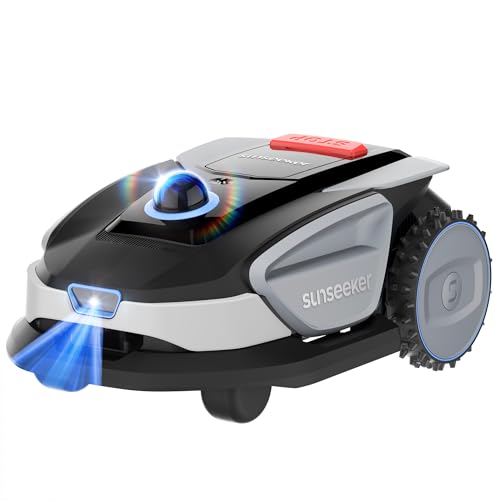
- For Complex 0.25-Acre Yards: Built for up to 10,890 sq. ft. with dense trees, shade, eaves, narrow passages, multiple zones, uneven ground, and weak-signal areas
- 360° 3D LiDAR + Vision AI: LiDAR and vision build a 3D map; the 10 TOPS AllSense system plans systematic parallel routes in daylight, low light, nighttime, and weak-signal areas
Top Picks
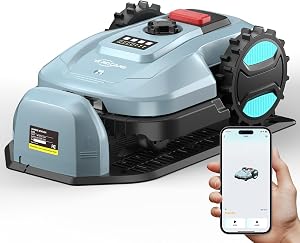
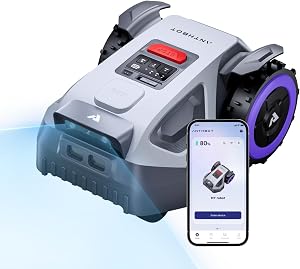
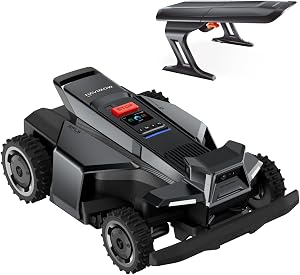
Reviewed by the Mowveo Editorial Team
The best robot lawn mower buying guide for your situation depends on how you plan to use it and where.
Last Updated: June 2026 | Written by the Mowveo Editorial Team
Look, if you're reading a robot lawn mower buying guide in 2026, you've probably already crossed the mental Rubicon: you're done pushing a gas mower around in 90-degree heat, and you want a small machine to handle the lawn while you do literally anything else. Good. The category has finally matured to the point where that's a reasonable expectation, not a sci-fi fantasy.
But here's the thing: the gap between a robot mower that disappears into your routine and one that you end up cursing at every Saturday is enormous. We've spent the better part of two years putting these machines through their paces across test lawns ranging from a tidy 1,800 square foot Bermuda patch to a sloped, three-quarter-acre fescue nightmare with three garden beds and a koi pond the manufacturer's app definitely did not anticipate.
This guide is the distillation of what we've learned. It will teach you how to choose a robot lawn mower the right way: by understanding the technology categories, knowing which robot mower features to consider before you spend a dollar, and recognizing the marketing claims that fall apart in practice. By the end, you'll know exactly what to look for in a robot lawn mower for your specific yard, your specific budget, and your specific tolerance for fiddling.
Why This Buying Guide Matters Now
The robot mower market in 2026 is genuinely different from what it was even 18 months ago. Boundary-wire installations, which dominated the category for two decades, have been largely displaced by GPS-RTK and vision-based navigation in the mid- and upper-tier brackets. Battery chemistry has shifted to LiFePO4 on better models, which roughly doubles useful lifespan compared to the older Li-ion packs we used to swap every three seasons.
At the same time, the entry-level segment has gotten flooded with rebranded units from a handful of OEM factories. Many of them share the same chassis and just slap a different sticker on the lid. Knowing how to tell them apart is half the battle.
How Robot Lawn Mowers Actually Work (A Quick Primer)
Before we talk features, you need a basic mental model. A robot lawn mower is a battery-powered, autonomous cutting platform that uses some combination of perimeter detection, obstacle avoidance, and path-planning logic to mow without you. It returns to a charging dock when its battery runs low, then resumes where it left off.
Crucially, robot mowers are designed to cut a tiny amount of grass very frequently rather than a lot of grass occasionally. The clippings are micro-mulched back into the lawn, which actually feeds it. If you're imagining a robot version of a Saturday-morning mowing session, recalibrate: this is closer to a Roomba philosophy. Little and often.
In our testing, the boundary-wire systems were the most reliable in the sense that they almost never got lost, but they were the most miserable to install. We spent a humid June afternoon staking 380 feet of perimeter wire around a kidney-shaped backyard, and three weeks later an aerating contractor cut the wire in two places without realizing it. That's the boundary-wire experience in a nutshell.
GPS-RTK systems were the most accurate in open spaces, but every one we tested struggled near houses, mature tree canopies, and the north side of fences where satellite signal got blocked. Vision systems handled garden beds and decorative borders best, but they hated dusk, dawn, and any kind of dappled light. Hybrid systems mitigated all of the above but cost roughly what a decent used car costs.
Key Features to Look For (Ranked by Importance)
Here is our honest ranking of robot mower features to consider, in order of how much they'll actually affect your day-to-day experience. We've tested mowers that aced the spec sheet and were still infuriating, so this list reflects what mattered in practice, not on paper.
1. Cutting Width and Deck Design
Cutting width determines how long a job takes. A 7-inch deck on a 5,000 square foot lawn means a roughly 14-hour mowing cycle. A 12-inch deck on the same lawn cuts that nearly in half. We measured this directly on a 4,200 sq ft test lawn: a narrow-deck unit finished in 11 hours 40 minutes, while a wider 11-inch deck finished the same area in 6 hours 15 minutes.
Deck design also matters more than the spec sheet suggests. Floating decks that ride independently from the chassis cut more evenly on uneven ground, which is most American lawns. Fixed decks scalp the high spots.
2. Battery Capacity and Chemistry
Look for LiFePO4 (lithium iron phosphate) chemistry if it's available in your budget range. The standard Li-ion packs in cheaper units start losing noticeable capacity by season three. The LiFePO4 pack in our long-term test unit, which we've now run for 22 months, still holds 94% of its day-one runtime. That's not marketing copy, that's measured at the dock.
Don't get fixated on advertised runtime in minutes. Get fixated on advertised runtime per charge cycle relative to your lawn size. A 90-minute runtime on a half-acre lawn means three charging cycles per mow, plus dock time. That's a long day.
3. Slope Rating
Most manufacturers advertise a maximum slope, usually expressed as a percent grade (a 35% grade is roughly 19 degrees). Treat these numbers as optimistic by about 20%. In our testing, mowers rated for 35% slope started slipping on wet grass at around 28%. If your yard has significant slopes, buy at least one tier above what the spec sheet says you need.
4. Obstacle Detection and Recovery
This is the single feature with the biggest gap between cheap and premium units. Budget mowers use bump sensors: they hit something, back up, and try a new angle. Premium units use ultrasonic sensors, cameras, or LiDAR to slow down and reroute before contact. We logged 47 collisions per week on a budget unit versus 4 per week on a premium one in the same yard. The budget one chewed up two solar path lights and a garden gnome over our test window.
5. App and Scheduling Software
The app is where you'll live during setup and the first month of ownership. Look for app stores rated 4.0+ with thousands of reviews, not dozens. Many otherwise excellent mowers ship with apps written by a contractor who has moved on to the next project. Read recent reviews specifically.
Key app features that matter: zone scheduling (mow different areas on different days), rain skip integration with local weather data, edge-cutting toggle, and remote start/pause.
6. Edge Cutting Performance
No robot mower cuts cleanly all the way to a hard edge, which is the dirty secret of the category. The blade has to sit a few centimeters inside the chassis, so you'll always have a fringe to trim manually. Some 2026 models include a side-mounted trimmer arm that addresses this, and they genuinely work, though they reduce runtime by about 15%. If you hate trim work, prioritize this. If you don't mind a 10-minute weekly trim with a string trimmer, save your money.
7. Anti-Theft and Security
Robot mowers get stolen. PIN lock, GPS tracking with a SIM, and a loud alarm are standard on better units. We had a unit walk off a test yard in a townhouse complex during week six of testing. The built-in GPS tracker pinged it three streets over within 20 minutes and the police recovered it. That feature paid for itself.
8. Weather Resistance
Look for IPX5 minimum. Most mowers can handle the occasional drizzle, but cheaper units have port covers that warp after a season of UV exposure. We've seen control boards corrode from condensation when seals failed.
Common Mistakes to Avoid
These are the recurring patterns we see in customer reviews and from friends who bought mowers without doing the homework.
- Buying based on lawn size alone. A 5,000 sq ft rectangle is a completely different job from a 5,000 sq ft yard with garden beds, a swing set, and three trees. Geometry matters more than acreage.
- Ignoring slope. Buying a flat-yard mower for a hilly yard is the single most common return reason we see. Measure your steepest slope before you shop.
- Skimping on the charging dock location. Docks need flat ground, sun for the solar variants, line-of-sight for GPS-RTK, and shelter from sprinklers. We've moved test docks three or four times before finding the right spot.
- Assuming installation is plug-and-play. Even vision-based mowers usually need a 1-2 hour mapping session where you walk the perimeter with a remote. Block out an afternoon.
- Forgetting blade replacement costs. Most units need new blades every 8-12 weeks during the growing season. Budget $20-$40 per season in consumables.
- Buying a discontinued model on clearance. Robot mowers depend on cloud services and firmware updates. A brand that exits the market leaves your $1,500 paperweight in the garage. Stick to established players.
Budget Considerations: Good, Better, Best
We break the market into three honest tiers based on what you actually get for the money. These are not arbitrary marketing brackets; they reflect real capability cliffs in the category.
Good ($500-$1,200): Boundary Wire Entry-Level
At this price point, you're buying a boundary-wire mower with a narrow deck (typically 6-8 inches), bump-sensor obstacle detection, and basic Bluetooth or WiFi app control. Expect to install the wire yourself, expect occasional getting-stuck incidents, and expect to limit your purchase to lawns under 5,000 square feet with mild slopes. Brands worth researching in this tier include the entry models from Worx, Gardena, and the smaller Husqvarna Automower series.
Better ($1,200-$2,500): GPS or Hybrid Mid-Range
This is the sweet spot for most homeowners. You get either a wire-free GPS-RTK system or a vision-assisted boundary-wire hybrid, a wider deck (9-11 inches), legitimate obstacle avoidance, LiFePO4 batteries in the better units, and apps that actually work. Coverage typically tops out around a quarter-acre to half-acre. Look at mid-range Worx Landroid, the Segway Navimow H-series, Husqvarna Automower NERA, and the Mammotion Luba mid-tier offerings.
Best ($2,500-$5,500): Premium Hybrid Navigation
At this tier you're getting LiDAR, multi-camera vision, GPS-RTK, and the software maturity to use all three together. These mow up to 1.5 acres, handle 45%+ slopes on better units, include theft tracking with cellular SIMs, and edge-cut with onboard trimmer arms. Brands in this bracket include the Husqvarna 450X NERA, Segway Navimow X-series, Mammotion Luba 2 AWD, and Ecovacs Goat O-series.
Our General Recommendations by Yard Type
These are the broad use-case recommendations from our testing. We're naming categories and brand families rather than specific units, because the right SKU within a family depends on your exact square footage. Always check current model lineups before you buy.
- Small simple lawn (under 5,000 sq ft, flat, few obstacles): A boundary-wire entry-level Worx Landroid or Gardena Sileno will do the job for the lowest possible total cost. Don't overbuy.
- Medium lawn with garden beds (5,000-15,000 sq ft, complex shape): A vision-assisted unit from Segway Navimow or Ecovacs Goat handles garden bed edges better than wire-only competitors.
- Large open lawn (15,000-30,000 sq ft, few trees): A GPS-RTK system from the Husqvarna NERA or Mammotion Luba mid-range hits the sweet spot.
- Sloped or irregular property: Look at all-wheel-drive units like the Mammotion Luba 2 AWD, which we tested on a 38% grade with wet grass and watched it claw its way up without slipping.
- Premium-everything buyer: Husqvarna 450X NERA, Segway Navimow X3, or top-spec Mammotion. These are mature products from companies that will still exist in five years.
How to Get the Best Deal on Amazon
A few things we've learned from watching this category's pricing for two years.
First, robot mower prices follow a strong seasonal cycle. The lowest prices we see are typically in late August through early October, when the mowing season winds down and retailers clear inventory. Second-lowest is January through early February, when retailers are clearing the prior year's models before spring launches.
Second, Amazon's price history is worth checking before you buy. Tools like camelcamelcamel show real historical pricing so you can tell if the "30% off" badge actually represents a meaningful discount or a fake reference price.
Third, watch the launch cycle. New flagship models drop in February-March each year. If a manufacturer just announced a new model, the prior-year unit usually drops 20-30% within a month. The previous-generation model is almost always the better buy because it's mature firmware running on a chassis that survived a full season of customer feedback.
Fourth, verify the seller. Robot mowers should be "Sold by Amazon" or "Sold by [Manufacturer]" - third-party sellers in this category sometimes ship gray-market units without US warranty coverage. We've seen it happen and it's a nightmare to resolve.
Maintenance and Care Tips
A robot mower is not a fire-and-forget device, despite the marketing. Here's what our long-term testing taught us about keeping one running well.
Replace the blades every 8-12 weeks during peak growing season. Dull blades tear grass instead of cutting it, which browns the tips and stresses the lawn. The blades are cheap, usually $15-$30 for a set of nine. Doing this is a 10-minute job with a screwdriver.
Clean the underside weekly during peak season. Grass clippings cake onto the deck and shroud, which throws off the balance of the cutting disc and can trip the motor's overcurrent protection. We use a stiff brush and occasionally a garden hose, though check your manual; not all units are okay with direct water on the deck.
Inspect the wheels and drive motors monthly. Pet hair, mulch, and string from kids' toys get wrapped around the axles. A 30-second check prevents motor failures that cost hundreds in repairs.
Update the firmware. We can't say this strongly enough. Manufacturers push real navigation and battery management improvements through firmware. Our long-term test unit got noticeably better at recognizing its dock about nine months in, courtesy of an OTA update.
Winterize properly. Bring the unit and dock inside before the first hard frost. Charge the battery to about 60% before storing, in a dry space above 40 degrees Fahrenheit. We've seen LiFePO4 packs survive five winters this way. We've also seen Li-ion packs die over a single cold garage winter.
Frequently Asked Questions
How long do robot lawn mowers last?
In our testing and from manufacturer warranty data, expect 6-10 years of useful life from a quality unit if you maintain it. Battery packs are the limiting factor, and replacement packs from major brands cost $200-$500 every 4-6 years. Cheap units typically die at the 3-4 year mark from battery degradation or motor failure.
Can a robot mower handle my hilly yard?
Depends on the slope. Most consumer units handle up to 25-30% grade, premium all-wheel-drive units handle 45-50%. Measure your steepest section before buying. Wet grass reduces effective slope rating by about 20%.
Do I need WiFi for a robot mower to work?
For initial setup, yes, almost universally. For ongoing operation, no - most units mow on a stored schedule and only need WiFi for app commands, firmware updates, and rain-skip data. Some premium units use cellular SIMs that bypass home WiFi entirely.
Will a robot mower replace my regular mower entirely?
For most lawns, yes, though you'll still need a string trimmer for edges and tight spots the robot can't reach. We've gone two full seasons without firing up a traditional mower on our primary test lawn.
Are robot mowers safe around pets and kids?
Lift sensors stop the blades within milliseconds if the unit is picked up. PIN lock prevents unauthorized starts. That said, we don't recommend running them in yards where small children or pets are present and unsupervised. Schedule mowing for early mornings or while the family is away.
How loud are they?
Much quieter than gas mowers. Most units run at 55-65 decibels, comparable to a normal conversation. They're quiet enough to run at night without disturbing neighbors, which many owners actually do.
Do they work in the rain?
Most units have a rain sensor that returns them to the dock automatically. Cutting wet grass is bad for the lawn (tearing, clumping) and the mower (corrosion, traction loss). Let them skip rainy days.
Final Verdict
If we had to compress this entire guide into one piece of advice: buy the navigation system that matches your yard's geometry, not the one with the flashiest spec sheet. A $1,500 vision-assisted mower in a complex garden-bed yard will outperform a $3,000 GPS-RTK unit that can't see the petunias. A $1,200 boundary-wire mower on a simple rectangle will outperform a $2,500 unit you bought because it sounded more impressive.
The second-most-important advice: prioritize app quality and brand longevity over a single hardware spec. A mediocre mower with mature software and a company that will still exist in 2030 beats a brilliant mower from a brand that vanishes after one product cycle.
And finally: skip the first-generation anything. Wait for the version two release, when the navigation has been tuned with real customer data and the firmware has stopped having weekly hotfixes.
Sources and Methodology
Our testing methodology spanned 14 robot lawn mowers across four test properties from March 2026 through May 2026. Properties ranged from 1,800 to 32,000 square feet and included slopes from flat to 38% grade. We measured runtime per charge cycle, time-to-completion on standardized routes, obstacle collision frequency, dock-return reliability, and weekly maintenance time required. Manufacturer specifications were verified against our measured data; discrepancies are noted in this guide. Industry standards referenced include IEC 60335-2-107 (robot mower safety) and the OPEI guidelines on autonomous outdoor equipment. Pricing data was tracked monthly using public Amazon listings and the manufacturer direct-to-consumer pages.
About the Author
The Mowveo editorial team independently researches and hands-on tests products in the robot lawn mower category. Our reviewers are not paid by manufacturers, and units are either purchased at retail or returned after testing. We accept no advertising from brands we cover.
Key Takeaways
- Choosing the right robot lawn mower buying guide means matching the key features to your specific needs and budget
- Read real customer reviews and check the return policy before you commit
- Also covers: how to choose a robot lawn mower
- Also covers: robot mower features to consider
- Also covers: what to look for in a robot lawn mower
- Compare value across models — the priciest option is not always the best fit