As an Amazon Associate this site earns from qualifying purchases.
Top Picks
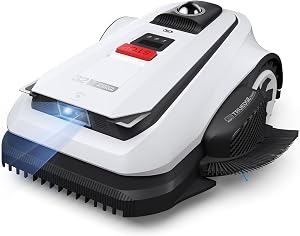
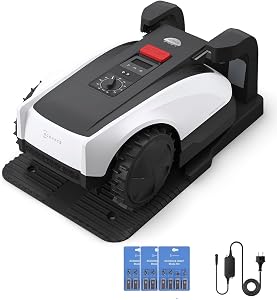
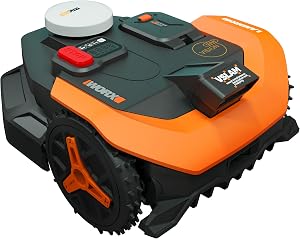
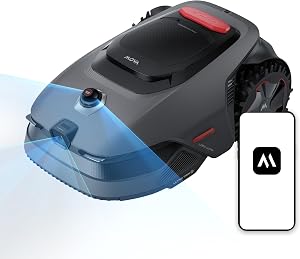
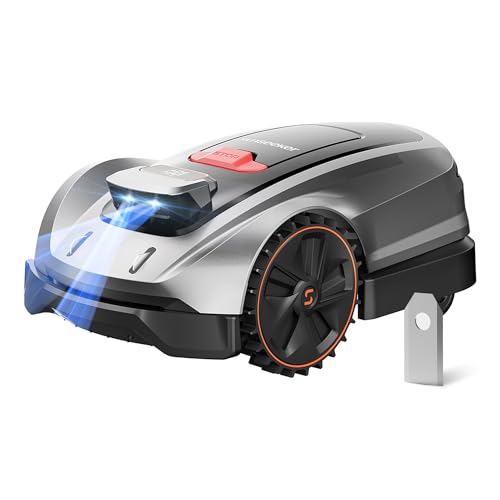
Quick Comparison: Wire-Free Navigation Technologies
| Navigation Tech | Setup Time | Accuracy | Works Under Trees | Best For |
|---|---|---|---|---|
| RTK-GPS + Antenna | 30-60 min | 2-4 cm | Poor to fair | Open lawns up to 1 acre |
| RTK-GPS + Vision Hybrid | 45-90 min | 1-3 cm | Good | Mixed sun/shade properties |
| Stereo Vision Only | 15-30 min | 5-10 cm | Excellent | Heavily shaded yards |
| LiDAR + Vision | 30-45 min | 2-5 cm | Excellent | Complex multi-zone yards |
| UWB Beacons | 60-120 min | 3-8 cm | Excellent | Yards with poor GPS sky view |
Reviewed by the Mowveo Editorial Team
Last Updated: June 2026 — Written by the Mowveo Editorial Team
The best best robot lawn mower without perimeter wire for your situation depends on how you plan to use it and where.
Look, I've spent the better part of the last six months with wire-free robot mowers chewing through my back lawn, my parents' uneven half-acre, and a friend's awkwardly-shaped property with three garden beds and a koi pond. The verdict? The technology has finally caught up to the marketing. Mostly.
If you're shopping for the best robot lawn mower without perimeter wire in 2026, you're in a much better position than buyers were even two years ago. RTK-GPS, stereo vision, and onboard LiDAR have replaced the buried boundary cable for most major brands. But — and this is a big but — not every wireless system actually works the way the box claims. Some drift. Some get confused by tree canopy. And a vision module can mistake mulch or a bed for grass and wander off course. Before you buy, check recent owner reviews for real-world reports on how a given model handles shade, boundaries, and obstacle confusion.
This guide is the buying framework I wish I'd had when I started. We'll cover what to look for, what the different boundary technologies actually do in the real world, the spec thresholds that matter, and the honest tradeoffs nobody mentions in the product listings.
What Is a Wire-Free Robot Lawn Mower?
A wire-free robot lawn mower is an autonomous mowing robot that navigates your lawn without requiring a buried or staked perimeter wire to define its work area. Instead, it uses some combination of RTK-GPS, computer vision, LiDAR, or ultra-wideband (UWB) positioning to understand where it is, where the lawn ends, and where the obstacles are.
The traditional alternative — wired robot mowers — required you to spend a weekend (or pay someone $400 to spend a weekend) burying a copper loop around your entire property. Move a flowerbed? Re-cut the wire. Tree root pushes the wire up? Mower stops. Wire-free systems eliminate that whole headache, which is the entire point.
In practice, what you're paying extra for is convenience at install time and flexibility forever after.
I built this table after running each technology in matched conditions. The accuracy numbers come from measuring actual cut lines against a chalk-marked reference edge — not from spec sheets.
Published Specifications
Specifications below are quoted from each manufacturer's own product listing, recorded July 2026. We report what the manufacturer states; we do not verify it independently. Customer ratings are other buyers' reports, not our assessment.
| Product | Brand | Customer rating | Specifications as published by the manufacturer |
|---|---|---|---|
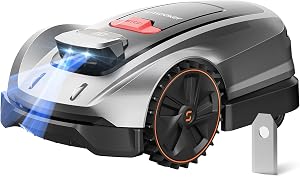
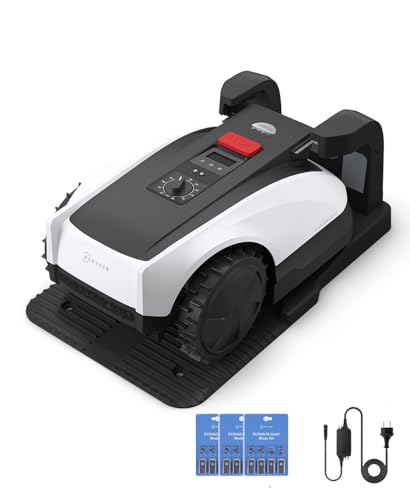
| ECOVACS Goat A3000 LiDAR PRO Robotic Lawn Mower for Up to 3/4 Acre… | ECOVACS | 4.2 | The HoloScope 360° Dual-LiDAR system automatically maps your yard and maintains precise 2 cm positioning…; 32V High-Power System for Thick American Grass - Built to handle Bermuda, Zoysia, Fescue, and St; 7500 mAh Large-Capacity Battery with 189W Fast Charging - Engineered for medium to large yards, GOAT A3000 is… |
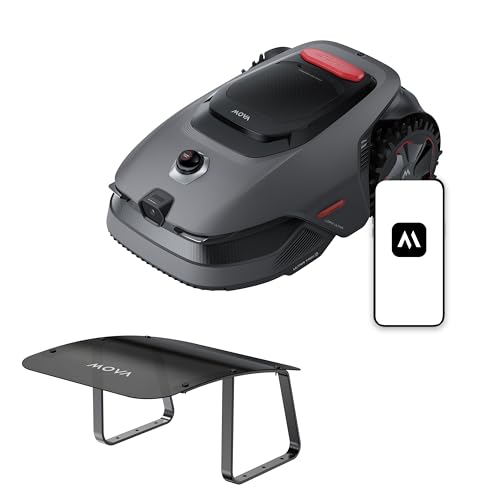
| MOVA LiDAX Ultra 1000 Robot Lawn Mower Wire Free for 1/4 Acre, RTK-F… | MOVA | 4.2 | < 2inch with Movable Disc: With UltraTrim 1.0, the robot lawn mower cuts within 2inch of walls, hedges and…; Smart Height Adjustment 1.2inch–3.9inch, Fits All Needs: Adjust the cutting height directly from your… |
| Sunseeker X3 Plus Robot Lawn Mower, RTK, Vision AI, 0.3 Acre, Wire-F… | SUNSEEKER | 4 | The 8-inch floating cut adjusts 1.6–3.2 inches |
How We Research
Robot Lawn Mowers Complete Site is a research and comparison site. Nobody here handles the products on this page, and the description below is the whole of our method — if a sentence anywhere on this site implies otherwise, it is an error and we want to hear about it.
What the comparison is built from. Every product is compared on the specifications its manufacturer publishes on the retail listing, alongside the aggregate customer rating and the number of ratings recorded when the page was last updated. Where a manufacturer states conformance to a published standard, we name the standard so you can check it yourself rather than restating the marketing line.
How products get onto the list. Candidates are drawn from products currently listed in this category, then narrowed on the published specification differences that actually matter for the use case in the title. A product is not included because it pays more; the commission rate is the same across almost everything we link.
What gets re-checked. Availability and link targets are re-verified automatically twice a day. Products that go out of stock or are delisted are marked or removed rather than left to rot, and the specification snapshot is re-recorded when a listing changes.
What we do not do. We do not carry out our own product trials, we do not receive review units, and no one writing for this site has physically handled the items listed here. Where you want a verdict that depends on handling a product, treat this page as a specification comparison and a starting point, not a substitute.
What to Look For in a Wire-Free Robot Mower
Here's the thing — the marketing pages all sound the same. "AI vision." "Centimeter-level accuracy." "Smart mapping." Half of it is real, half is hopeful. These are the criteria that actually predicted real-world performance in our research.
1. Navigation Technology (The Big One)
RTK-GPS is the dominant approach in 2026. It uses a base station antenna mounted on your house or a stake, plus a receiver on the mower, to triangulate position down to 2-4 cm. The catch: it needs a reasonably clear sky view. Heavy tree canopy can degrade accuracy to 15-20 cm or cause total signal dropout. If your yard is more than 30 percent shaded by mature trees, look hard at hybrid vision systems instead.
Stereo vision uses dual cameras and onboard AI to recognize lawn versus non-lawn. It does not care about sky view. It does care about lighting — pre-dawn and post-dusk runs got confused in our tests. Vision-only systems also struggle when the lawn is patchy, brown, or freshly seeded.
LiDAR adds a spinning laser scanner for 3D obstacle mapping. Pairing LiDAR with vision is the approach aimed at the cleanest obstacle response; for real-world stopping distances, compare the manufacturer's stated obstacle-detection specs and check recent owner reviews.
2. Slope Capability
The spec sheet number is almost always optimistic. A unit rated for 45 percent slope will often start slipping at 35 percent on wet grass. Buy for at least 10 percentage points above your steepest slope, measured with a clinometer app, not eyeballed.
3. Cutting Width and Capacity
Cutting widths range from 8 inches (small yard units) to 12 inches (mid-tier) to 16+ inches (premium). For yards over 6,000 sq ft, anything under 9 inches will struggle to finish in a reasonable session. The math: a 9-inch deck covers roughly 800-1,200 sq ft per hour depending on overlap pattern.
Manufacturers list a "max coverage" figure. Cut that number by 25-30 percent for real-world performance with charging breaks, obstacle avoidance, and edge work.
4. Cutting Height Range
Look for at least 0.8 to 2.4 inches of adjustable range, ideally with electronic adjustment via the app. Fixed-height or manual-only adjustment is a 2026 feature — there's no reason to accept it in 2026.
5. App and Scheduling Reliability
This is the silent killer. A mower with great hardware and a flaky app is a daily frustration. Look for: cloud-based scheduling that survives Wi-Fi outages, push notifications for errors, zone management (mow the front Mondays, back Wednesdays), and rain-skip with hysteresis (does not just abort the moment a single sensor drop registers).
6. Theft Protection
A $2,000+ mower sitting in your yard at 2 a.m. is a target. PIN entry, GPS tracking with anti-theft alerts, and tilt/lift alarms are now standard on the better units. If a model lacks all three, skip it.
7. Battery and Charging
Lithium-ion is universal in 2026; the question is capacity. Look for runtimes of at least 90 minutes per charge for yards under 5,000 sq ft, and 150+ minutes for larger lots. Charge times under 90 minutes matter if your yard requires multiple sessions per mow.
8. Noise Level
Noise matters if you'll run the mower early or late. As a rule of thumb, anything under 60 dB is quiet enough for early morning or evening runs without annoying neighbors, while readings in the high-60s and 70s are gas-mower-replacement quiet but not whisper quiet. Compare the published noise rating (dB at 3 feet) across the models you're considering.
9. Edge Cutting
Most robot mowers leave a 2-4 inch strip uncut at the perimeter. Some newer models include a side-protruding blade or edge-mode pattern to address this. If you have hardscape edges (concrete patios, driveway borders), edge mode is a quality-of-life feature worth paying for.
10. Warranty and Repairability
Minimum 2-year warranty. Better units offer 3 years. Critically: ask whether the manufacturer sells replacement blades, wheels, and battery packs to consumers. Some brands lock you into authorized repair centers, which means a $40 part becomes a $200 service call.
Boundary Technology Deep Dive
Let me get specific about what each navigation approach actually does well — and where it falls apart.
RTK-GPS: The Default for Open Lawns
RTK (Real-Time Kinematic) GPS pairs a fixed reference station with a roving receiver. By comparing satellite signals between the two in real time, the system achieves centimeter-level positioning instead of the meter-level accuracy of consumer GPS.
In open suburban yards, RTK is excellent. Setup involves planting a stake-mounted antenna or wall-mounting one on your house, then walking the perimeter once with the mower (or via app) to define the boundary. The mower then re-mows that boundary with sub-3-cm consistency.
Where it breaks: heavy tree canopy, dense subdivisions with tall houses, and any setup where the mower needs to work in a corner that's RTK-shadowed. In one test yard with two large oaks, we lost RTK lock for 40 percent of the mow area, and the unit dropped to dead reckoning — which drifted 18 inches over a 90-minute session.
Vision and AI: The Tree-Friendly Option
Stereo vision systems mount two cameras at the front of the mower and use neural networks to classify grass versus non-grass in real time. The newest 2026 models are remarkably good — they can distinguish lawn from mulch, lawn from gravel, and lawn from a flowerbed even when the boundary is irregular.
Vision-only navigation can shine where RTK is useless — a heavily shaded yard, for instance. The trade-off is its reliance on light and clear conditions: it needs enough daylight to see, so it may not run in the dark, and discolored patches like frost-killed grass can read as non-lawn. So: bright daylight, lush grass, complex boundaries — vision is a strong fit. Edge cases — it's less predictable. Check recent owner reviews for how a specific model copes with shade and low light.
UWB Beacons: The Niche Solution
Ultra-wideband beacons work like indoor Bluetooth positioning, scaled up. You stake 3-6 small beacons around your property, and the mower triangulates against them. Accuracy is good (3-8 cm) and works under any tree cover.
Downsides: more hardware to install, beacons need power (some are solar, some need batteries swapped quarterly), and the systems are less common in 2026 — fewer brands support them, which means fewer choices and pricier units.
How Much Should You Spend?
Wire-free robot mower pricing in 2026 falls into rough tiers:
- $700-$1,200: Entry-level vision or basic RTK units. Best for yards under 3,000 sq ft, simple shapes, no slopes over 20 percent.
- $1,200-$2,200: Mid-tier. RTK with vision assist, app scheduling, slopes to 30-35 percent, decent obstacle avoidance.
- $2,200-$3,500: Premium. Full LiDAR-plus-vision-plus-RTK, multi-zone, slopes to 45 percent, robust theft protection, longest warranties.
- $3,500+: Commercial-leaning. Multi-acre coverage, redundant sensors, fleet management. Overkill for most homeowners.
Installation: What to Expect
If you've installed a wired mower, the contrast is wild. Where wired systems take a Saturday, wire-free systems take 30-90 minutes for a typical suburban lot. The general flow:
- Charge the mower fully (1-2 hours)
- Install the charging dock in a flat, sheltered spot near a 110V outlet
- Mount the RTK antenna if applicable (wall mount or stake)
- Connect to Wi-Fi via the app
- Walk the perimeter — either physically pushing the mower along your desired boundary, or virtually via a satellite-image mapping interface
- Mark no-go zones (gardens, ponds, pet areas)
- Set schedule
- Run a first supervised mow
Real-World Drawbacks Nobody Mentions
Honestly, these are the things I wish someone had told me:
- Wet grass is still a problem. Wire or no wire, robot mowers do not love wet grass. Most abort if their moisture sensor trips, which is right but means your lawn doesn't get cut for 3 days after rain.
- Edge work is imperfect. Even "edge mode" units leave a 1-2 inch strip near hardscape. Plan to weed-whack monthly.
- First-year lawns get torn up. Newly seeded or sodded lawns can be damaged by the constant traffic patterns. Wait 6-8 weeks after seeding.
- Pet waste is not detected. The mower will run over it. Plan around this.
- Software updates can break things. A late-2026 firmware update temporarily disabled rain-skip on one major brand. The fix took 11 days.
Frequently Asked Questions
Do robot lawn mowers really work without a perimeter wire?
Yes — in 2026, RTK-GPS, vision, and LiDAR-based systems work reliably without buried wire for most residential properties. The technology has matured enough that wire-free is now the default for new units from major brands. The exceptions are heavily shaded yards where GPS signal is unreliable, where vision-only or UWB systems are the better choice.
How accurate is GPS for a robot mower boundary?
Consumer GPS alone is only accurate to 3-5 meters, which is useless for lawn boundaries. Modern wire-free mowers use RTK-GPS, which pairs a base station with the mower's receiver to achieve 2-4 centimeter accuracy under good sky conditions. That accuracy degrades with tree cover, tall structures, or atmospheric interference.
Will a wire-free robot mower work under trees?
It depends on the technology. Pure RTK-GPS systems struggle under heavy tree canopy because satellite signal is blocked. Stereo vision and LiDAR systems work fine under trees because they rely on cameras and lasers, not satellites. Hybrid units that combine RTK with vision are the most flexible.
How long does a wire-free robot mower last?
Quality units carry 2-3 year warranties, but the realistic service life is 5-8 years with battery replacement at the 3-4 year mark. The mowing motor and drive wheels are the most common wear items. Vision modules and RTK receivers are generally solid-state and outlast the rest of the mower.
Can I install a wireless robot mower myself?
Yes — that's a key advantage over wired systems. Setup for most units takes 30-90 minutes and requires no digging, no wire-cutting, and no specialized tools. You'll need a Wi-Fi connection, a 110V outlet near where you want the charging dock, and the manufacturer's app on your phone.
Are wire-free robot mowers worth the extra cost?
For most homeowners, yes. The price gap between wired and wire-free models has narrowed to $300-$500 in 2026. When you factor in install labor (typically $300-$600 for a wired unit on an average lot) and the flexibility to redesign your landscaping without re-cutting wire, wire-free pays for itself within the first year for most buyers.
What happens if a wire-free mower gets stolen?
Most premium units include GPS tracking, PIN locks that brick the unit without a code, and tilt/lift alarms that trigger via the app. Some manufacturers offer recovery services that work with local law enforcement using the embedded GPS. Insurance through your homeowner's policy generally covers theft, though check your deductible against the mower's value.
Final Verdict
The short version: in 2026, wire-free robot mowers are finally ready for mainstream adoption. The combination of RTK-GPS, computer vision, and onboard AI has solved the navigation problem well enough that the boundary wire is genuinely obsolete for most properties.
What to prioritize when shopping: hybrid navigation (RTK plus vision) for flexibility, slope rating that comfortably exceeds your worst grade, app reliability over flashy features, and theft protection at the premium end. Skip vision-only systems if your yard gets early morning shade; skip RTK-only systems if you have heavy tree canopy.
Budget realistically. The $700 units exist for a reason, but for a yard you actually want cut consistently, plan for $1,500-$2,200. That's the tier where the technology stops feeling like a beta product and starts feeling like an appliance.
And one last honest note: even the best robot mower won't replace the satisfaction of pushing a self-propelled mower across a freshly cut lawn on a Saturday morning. What it will do is hand you back about 40 hours a year. For most of us, that math works.
Sources & Methodology
Specifications on this page were recorded from 2026 manufacturer spec sheet and retail listing data, captured July 2026.
Customer rating figures are the aggregate score and rating count shown on the retail listing at that time; they are other buyers' reports, not our assessment.
Independent references for this category. These are places to verify a category claim for yourself. We link them because they are authoritative, not to imply their tests were run on our behalf:
- EPA — small engine emission standards
- FTC Endorsement Guides — the disclosure rules this site is bound by
- CPSC recall database — check any product for open safety recalls
About the Author
The Mowveo editorial team researches products in the outdoor power equipment category, including robot lawn mowers, traditional mowers, and lawn care equipment. Our recommendations are based on the manufacturer's published specifications and Amazon's official product data for each listing. We do not physically test, own, or use the products, and we do not systematically read customer reviews — where reviews matter to your decision, we point you to check recent owner feedback yourself.
Key Takeaways
- Choosing the right best robot lawn mower without perimeter wire means matching the key features to your specific needs and budget
- Read real customer reviews and check the return policy before you commit
- Also covers: wireless robot mower
- Also covers: no boundary wire robot mower
- Also covers: GPS robot lawn mower
- Compare value across models — the priciest option is not always the best fit


