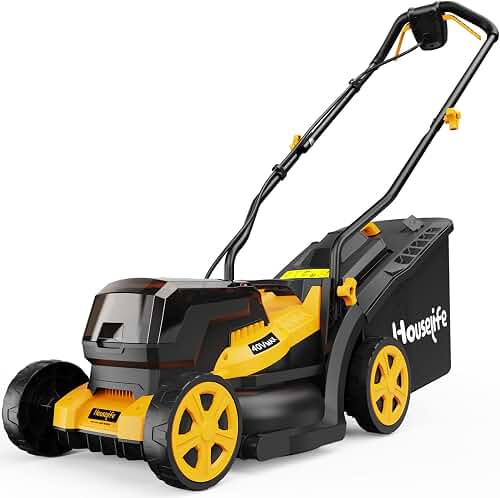
The best robot lawn mowers for elderly homeowners with mobility issues are models that prioritize one-touch operation, smartphone or voice control, automatic charging, and wire-free setup—removing the physical strain of mowing entirely. For seniors managing arthritis, balance concerns, joint pain, post-surgical recovery, or limited stamina, the ideal machine starts mowing with a single tap (or voice command), navigates the lawn without supervision, and returns to its dock when finished. In this 2026 guide we cover the specific features that matter most for mobility-limited users, the setup considerations families should plan for, and how to choose a model that fits your yard and physical capabilities.
Why robot mowers are a game-changer for seniors with mobility limitations
Traditional mowing—even with a self-propelled walk-behind—requires standing, pushing, turning, emptying clippings, and managing fuel or extension cords. For homeowners recovering from hip or knee replacements, living with arthritis, COPD, vertigo, post-stroke weakness, or general age-related fatigue, those tasks become unsafe or impossible. A robot mower eliminates every physical step. Once installed, it cuts the lawn on a schedule, returns to its dock to recharge, and resumes automatically. The owner's only ongoing role is occasional blade changes (a five-minute seated task) and clearing the rare error notification from a phone.
The second benefit is peace of mind for adult children and caregivers. Many seniors push themselves to keep mowing because they don't want to feel like they're "giving up" on yard care, leading to falls, heat stroke, and emergency room visits. A robot mower lets them retain pride of ownership over a tidy lawn without the physical risk—and without surrendering independence to a lawn service.
The features that matter most for elderly users
Not every robot mower is senior-friendly. When researching the best robot lawn mowers for elderly homeowners, prioritize these capabilities over raw cutting power or premium branding.
One-button or app-only operation
The best models for seniors with mobility issues never require the user to bend over, kneel, or lift the machine after initial setup. Look for "Start" and "Return to dock" controls accessible from a large smartphone widget or voice assistant. Avoid models that rely on a small top-panel keypad with PIN entry—those are difficult for arthritic hands and reading glasses, and many seniors find the screens illegible in bright sunlight.
Wire-free boundary setup
This is the single most important feature for senior buyers. Traditional robot mowers require burying or staking a perimeter wire around the entire lawn—a multi-hour project of bending, hammering, and walking that defeats the whole purpose of buying the machine. Modern GPS-RTK and vision-based models map the lawn by walking the perimeter once with a smartphone, or even autonomously. If the senior can't comfortably walk the perimeter themselves, a family member or installer can complete that one-time step. See our wire-free robot mower roundup for current 2026 picks.
Lightweight design and self-righting
Most quality robot mowers weigh 18–30 pounds—light enough for adult children to lift during initial placement, but seniors should never need to lift theirs. Look for models that self-right if tipped over, include carry handles for service trips, and roll easily on their own wheels when nudged.
Automatic scheduling and weather sensors
A truly hands-off mower decides when to mow based on grass growth, time of day, and rain sensors. The owner shouldn't need to manage a calendar or remember to send the mower out. Rain-pause is especially valuable in regions with afternoon thunderstorms.
Obstacle avoidance with cameras or LiDAR
Vision-based or LiDAR-equipped mowers from 2026 reliably avoid garden hoses, lawn furniture, toys, pets, and fallen branches without bumper contact. This matters enormously for elderly users who may not be able to do a yard sweep before each mow.
Quiet operation
Models running at 55–65 dB allow the mower to operate during nap windows, early morning, or evening hours without disturbing sleep or interfering with hearing aids. Compare this to gas mowers, which run at 95+ dB and can trigger tinnitus in older ears.
Voice-assistant integration
Alexa and Google Assistant compatibility lets seniors with arthritis or limited dexterity issue commands like "Alexa, start the lawn mower" from a kitchen Echo or bedroom speaker—no fumbling with phones, glasses, or buttons. This is especially valuable for users with Parkinson's disease or post-stroke fine motor impairment.
Yard size and slope: matching the mower to the lawn
A common mistake families make is buying an oversized mower "just in case." For an elderly homeowner, smaller is usually better—lighter to handle, cheaper to replace, and easier for a caregiver to service. Match the mower to actual lawn size:
- Under 1/4 acre: A compact, wire-free model handles this in under two hours per session and costs $600–$1,200.
- 1/4 to 1/2 acre: Mid-range models with longer battery life and dual-zone scheduling, typically $1,200–$1,800.
- Over 1/2 acre: Larger-capacity units in the $1,800–$3,500 range with extended runtime and faster cutting decks.
Slope matters more for seniors than for able-bodied homeowners, because rescuing a stuck mower on a hillside is dangerous. If the yard has a slope steeper than 20 degrees, only certain models can climb it safely. Our hills and slopes guide covers the all-wheel-drive options that handle steeper terrain.
Installation considerations for mobility-limited owners
The single most physical day in robot-mower ownership is installation day. Plan for it explicitly. For wired models, budget three to six hours of perimeter wire installation involving bending, hammering, and walking—the senior should never attempt this. Hire a professional or have family help. For wire-free GPS models, the mapping walk takes 20–60 minutes around the perimeter; if walking that distance is hard, a caregiver can hold the controller while the senior observes from a chair. Place the charging dock in a shaded location with easy outlet access and—critically—at a height where the senior never has to bend or kneel for routine inspection.
Safety features specifically for elderly households
Robot mowers are remarkably safe, but a few features are especially valuable for senior-occupied homes. Lift-and-tilt sensors stop the blades within milliseconds when the mower is picked up or tipped—critical if a grandchild or pet approaches. Blade guards reduce risk during manual cleaning. Geofencing alarms notify a caregiver's phone if the mower leaves the yard, useful as both anti-theft protection and a wandering-detection signal in households where cognitive decline is a concern. PIN lockouts can be set once by a family member so the senior never has to manage them.
Maintenance: keeping it truly hands-off
Robot mowers require some maintenance even in the best case. For elderly users, plan a quarterly tune-up with a family member or service: blade replacement every two to three months (a five-minute job done seated with the mower on its side at a workbench or kitchen table), cleaning the underside of grass clippings, checking the charging contacts, and winterizing the unit indoors. If no family member is local, many lawn-care companies now offer "robot mower maintenance" subscriptions for $100–$200 per year—money well spent for a senior living independently.
Budget considerations
Quality wire-free robot mowers for typical suburban yards range from $800 to $2,500. While the upfront cost seems steep, compare it against five to ten years of professional lawn-mowing service ($30–$50 per week multiplied by 30 weeks equals $900–$1,500 annually), the medical cost of one serious fall from continued manual mowing, and the quality-of-life cost of skipped outdoor time. For most elderly homeowners, a robot mower pays for itself within 18 months versus lawn service. Our budget guide breaks down the math by yard size and region.
A senior-friendly decision framework
Walk through these questions with the senior and a family member before purchasing:
- How large is the lawn, and what is its steepest slope?
- Is the yard fully fenced, or are there boundaries with streets, ponds, or pools?
- Does the senior want phone control, voice control, or both?
- Who will handle quarterly maintenance and seasonal storage?
- Where will the charging dock live, and is the outlet at a reachable height?
- Is the senior comfortable with smartphone apps, or should setup be locked down by family?
For a deeper walkthrough of model selection, see our complete guide to choosing a robot lawn mower. The best robot lawn mowers for elderly homeowners aren't necessarily the most powerful or expensive—they're the ones that match the household's specific physical needs, support network, and yard layout.
Frequently Asked Questions
Are robot lawn mowers safe around seniors, pets, and grandchildren?
Yes—modern robot mowers are among the safest powered yard equipment available. They include lift sensors, tilt sensors, bumper sensors, and obstacle-detection cameras that stop the blades within milliseconds of contact or disturbance. The cutting blades are small razor-style discs recessed beneath a guard, not the large rotary blade of a traditional mower. Most units run quieter than a normal conversation. The only meaningful precaution is keeping pets and small children indoors during the first few mowing sessions while everyone gets accustomed to the mower's movements.
Can a senior with arthritis set up and operate a robot mower without help?
Operating one day to day—yes, easily, through a smartphone app or voice command. Initial setup, however, involves walking the lawn perimeter (for wire-free models) or installing perimeter wire (for traditional models), which is physically demanding. We strongly recommend a family member, neighbor, or paid installer handle that one-time step. After that, the senior can manage everything from a chair, including starting, stopping, scheduling, and reviewing mowing history.
What if the senior has trouble using a smartphone app?
Voice control is the answer. Choose a model compatible with Amazon Alexa or Google Assistant and pair it with an existing smart speaker. Commands like "Start the lawn mower" or "Send the mower home" work without any phone interaction. A family member can also set automatic schedules so the senior never needs to issue a command at all—the mower simply runs three or four times a week on its own.
How loud are robot mowers, and will they disturb a napping senior?
Most quality robot mowers run at 55–65 decibels, quieter than a dishwasher and far quieter than a gas mower at 95+ decibels. They can operate during midday naps, early morning, or evening hours without disturbing rest or interfering with hearing aids. For especially noise-sensitive users, models like the Gardena Sileno line operate at around 57 decibels, which is roughly the volume of light rain.
What happens if the robot mower gets stuck while the senior is alone?
The mower sends a notification to the paired phone and stops running—it will not damage itself or the lawn while waiting. Most "stuck" events are easily cleared by a caregiver during their next visit (typical causes: wet leaves, a stray hose, or a wheel in soft soil). Many families set up notifications to go to an adult child's phone instead of, or in addition to, the senior's phone, so help is dispatched without the senior having to ask.
Will a robot mower work on a sloped or uneven yard typical of older homes?
Most quality models handle slopes up to 20–25 degrees, and some all-wheel-drive units handle 45 degrees. Uneven terrain with shallow bumps and dips is generally fine—the floating cutting deck adjusts automatically. If your yard has steep grades, check our slope-specific recommendations before buying.
How much yard preparation does the senior need to do before each mow?
For the first few mows, a family member should sweep the lawn for hoses, toys, large sticks, and pet waste. After two or three sessions with a camera-equipped model, the mower has typically learned its avoidance routes and weekly prep becomes minimal—often just leaving the yard alone. Most owners report total prep time drops to two or three minutes per mowing session, which a senior can easily handle from a porch or patio chair.