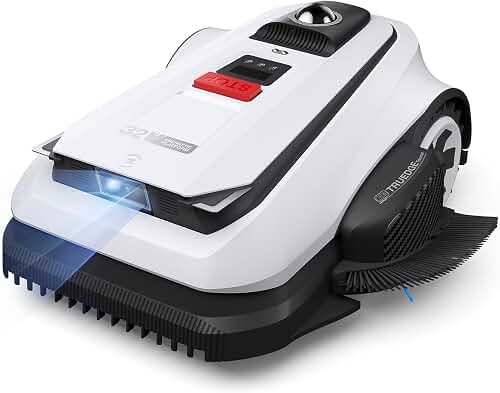
Comparison: robot mower features that matter for Buffalo grass
| Feature | Buffalo grass minimum | Buffalo grass ideal |
|---|---|---|
| Max cutting height | 60 mm (2.4 in) | 70-90 mm (2.75-3.5 in) |
| Slope rating | 25% | 35-45% |
| Water/dust rating | IPX4 | IPX5 or higher, sealed bearings |
| Navigation | Boundary wire | RTK-GPS or vision (open sky lots) |
| Weather adaptation | Rain sensor | Heat + drought scheduling via app |
| Cutting frequency | 3x per week | Daily micro-pass |
| Coverage | Match your lot size | 20% headroom for slow drought-mode cycles |
The best robot mowers for Buffalo grass Great Plains homeowners need to handle a unique combination: a warm-season turf that thrives on neglect, an arid climate with sudden dust storms, and lawns that often stretch across uneven prairie ground. Buffalo grass (Bouteloua dactyloides) is shallow-rooted, drought-tolerant, and grows in a relaxed, sprawling habit, which means it benefits from frequent micro-mulching rather than scalping. A robot mower is arguably the ideal match: it trims tiny clippings several times per week, recycles nitrogen back into thin prairie soils, and never stresses the lawn the way a weekend reel cut would. In this 2026 buyers guide we break down what to look for in a robot mower built to survive Nebraska wind, Kansas heat, Colorado hail, and the dusty Oklahoma summer.
Why Buffalo grass on the Great Plains needs a different robot mower
Buffalo grass is one of the few truly native turf grasses in North America, and it is the dominant choice for water-wise lawns across the Great Plains corridor running from the Texas Panhandle up through the Dakotas. Unlike Kentucky bluegrass or fescue, Buffalo grass tops out around 4-8 inches when unmowed and looks best when kept between 2 and 3 inches. It spreads via stolons rather than rhizomes, so it tolerates light, frequent topping but resents heavy single-pass mowing that removes more than one-third of the blade at a time. That is precisely what a robot mower does well — it shaves a few millimeters per pass, several times per week, and drops nearly invisible clippings.
The catch is environmental. Great Plains lawns face conditions most European-designed robot mowers were never tested for: 40 mph spring winds, fine loess dust, summer surface temperatures above 140°F on bare ground, hailstorms, and prolonged drought that turns Buffalo grass dormant (and brown) from August through September. The best robot mowers for Buffalo grass Great Plains conditions need a few specific traits: sealed bearings and IPX5+ housings, brushless motors that handle dust, generous wheel tread for sandy or clay soils, and smart scheduling so the mower can pause during dormancy without overworking already-stressed turf.
What to look for in a Great Plains robot mower
Cutting height range that respects Buffalo grass
Aim for a mower with a top cut height of at least 2.4 inches (60 mm) — ideally 2.75 inches or more. Buffalo grass kept too short loses its drought tolerance because it can no longer shade its own crowns. Many European robot mowers cap out at 60 mm, which is borderline; premium models extend to 70-90 mm and are a better long-term fit.
Dust and debris resistance
Prairie wind deposits silt into every seam. Look for IPX5 wash-down ratings, sealed deck bearings, and brushless drive motors. Avoid mowers with exposed belt drives unless you are prepared to blow them out weekly.
Slope handling for rolling terrain
Much of the Great Plains is gently rolling rather than flat. A 25-30% slope rating (about 14-17°) covers most residential lots. If you live along a creek bed, river bluff, or in the Flint Hills, look at 35-45% capable models.
Wire-free vs. boundary-wire navigation
RTK-GPS and vision-based wire-free mowers have matured rapidly through 2025 and 2026. They are particularly attractive on the Plains because you do not have to bury a perimeter wire across a half-acre of hard-packed clay. However, RTK reception can be inconsistent under dense cottonwood canopies or near grain silos that reflect signal. If your sky view is clean, go wire-free; if you have heavy tree cover or outbuildings nearby, a boundary-wire mower remains the safer bet.
Drought-mode scheduling
The single most important software feature for Buffalo grass is the ability to pause or reduce frequency automatically. Look for apps that integrate weather forecasts (rain delay is standard; heat-and-drought delay is rarer but available on Husqvarna Automower Connect, Segway Navimow, and Worx Landroid via the AIA app).
How robot mowers actually help drought-tolerant lawns
Frequent mulching with a robot mower returns roughly 25% of the nitrogen Buffalo grass needs back to the soil annually, according to turf studies from Kansas State and the University of Nebraska. Because the clippings are tiny (under 5 mm) they decompose within days rather than forming the thatch layer that traditional rotary mowers leave behind. For Buffalo grass — which has very low fertilizer requirements to begin with — this means you may eliminate synthetic feeding entirely, saving water (no need to irrigate fertilizer in) and money. If you are new to the category, our guide on how robot lawn mowers work explains the micro-mulching cycle in more depth.
Top robot mower categories for Buffalo grass Great Plains lawns
Best for large prairie lots (1/2 to 1+ acre)
If your Buffalo grass lawn stretches across a typical Plains property — quarter to full acre, often with a windbreak of cedars on the north side — you need a mower with serious battery range and a high daily cutting capacity. Premium Husqvarna Automower models with EPOS satellite navigation handle this beautifully, as do the larger Segway Navimow H-series. Both keep Buffalo grass at a healthy 2.75-3 inches without scalping. For an in-depth look at acreage-class options, see our roundup of the best robot lawn mowers for large yards.
Best for compact xeriscaped front yards
Many Front Range and High Plains homeowners have converted small front yards from bluegrass to Buffalo grass as part of a xeriscape conversion. For these 1,000-4,000 sq ft lots, a Gardena Sileno or Worx Landroid S is plenty of machine. They are quiet enough to run during the day without disturbing neighbors, and their lower price points fit well with the water-savings ROI calculation that motivated the conversion in the first place. Our small yard robot mower guide has specific picks.
Best wire-free option for open prairie lots
Open sky and clear satellite views make Great Plains lots ideal for RTK-GPS mowers. The Segway Navimow series and Mammotion Luba 2 AWD have both performed well in 2025 testing in Kansas and Nebraska. The wire-free approach is especially attractive if your soil is the hard-packed clay common east of the 100th meridian — burying a perimeter wire in August is genuinely miserable work. See our breakdown of the best wire-free robot lawn mowers for current picks.
Best for rolling terrain and creek banks
If your lot rolls down toward a draw or borders the Flint Hills, slope capability becomes critical. Husqvarna's X-line and Worx Landroid L with all-wheel-drive accessories handle 35-45% inclines that defeat budget mowers. Buffalo grass actually grips slopes well thanks to its stolon structure, so the limiting factor is the mower's traction, not the turf. Our hill-and-slope guide at the best robot mowers for hills and slopes compares the top contenders.
Setting up a robot mower for Buffalo grass success
Cutting height schedule by season
Buffalo grass has a distinct seasonal rhythm on the Great Plains. In May and June when it is greening up and putting on most of its growth, set the mower to 2.5 inches and let it run every other day. From July through mid-August during peak heat, raise the height to 3 inches and reduce frequency to every third day — this preserves leaf area to shade the soil and reduce evaporation. From late August through September, when the grass enters summer dormancy and turns straw-colored, suspend mowing entirely. Restart in October when fall rains usually bring a brief green-up, then winterize for the season.
Dust and storm preparation
During the typical April-June severe weather window, program your mower to dock automatically when wind speeds exceed 25 mph (most weather-aware apps now support this). Hail is the bigger threat — keep the dock in a sheltered location under a deck overhang or garage eave if at all possible. A simple steel mesh dock cover keeps cottonwood fluff, dust, and pea-sized hail off the charging contacts.
Wire installation in hard prairie soil
If you choose a boundary-wire mower, install in spring or fall when soil is workable. Summer clay east of Denver is essentially concrete from July through August. Alternatively, surface-pin the wire and let Buffalo grass grow over it within 6-8 weeks. For step-by-step instructions see how to install a robot lawn mower.
Common Buffalo grass + robot mower mistakes
The number-one mistake we see Great Plains homeowners make is setting the cut height too low. Buffalo grass mowed below 2 inches loses drought tolerance, opens up bare patches, and invites weeds like crabgrass and Bermuda. The second most common mistake is running the mower during dormancy — the wheels create wear paths through dry, brittle stolons that take months to recover. The third is neglecting the underside of the deck; prairie dust caked with grass juice forms a cement-like coating that throws cutting discs out of balance and burns out motor bearings. Plan on a quick brush-off every two weeks during the growing season.
Budget considerations for Plains lawns
A Buffalo grass lawn is, by definition, a low-input lawn — water bills are minimal, fertilizer is unnecessary, and you are probably already saving thousands per year versus a bluegrass equivalent. That gives many homeowners room in the budget for a mid-tier or premium robot mower with the cutting-height range and weather smarts Buffalo grass deserves. That said, if you want to keep total spend under $1,000, plenty of capable options exist. See our robot lawn mower budget guide for current price tiers and what each unlocks.
Frequently Asked Questions
Can a robot mower handle dormant Buffalo grass in summer?
It can, but it shouldn't. Buffalo grass goes dormant during extreme drought to protect its crowns and root system. Running a robot mower across dormant grass — even gently — creates wheel wear paths and shears off stolons that the plant needs to regrow when fall rains arrive. Suspend mowing whenever the lawn turns predominantly straw-colored, typically late August through September on the central Plains. Resume only when at least 50% green-up returns.
What is the best cutting height for Buffalo grass with a robot mower?
Set your robot mower between 2.5 and 3 inches (60-75 mm) for most of the season, and 3 to 3.5 inches during the hottest July-August stretch. Avoid going below 2 inches — Buffalo grass cut too short loses its competitive edge against bluegrass, crabgrass, and other weeds that would otherwise be shaded out by a healthy stand of properly maintained native turf.
Do robot mowers work in Great Plains wind and dust storms?
Yes, with caveats. Models rated IPX5 or higher with sealed bearings and brushless motors tolerate Plains conditions well. Schedule the mower to dock automatically when sustained winds exceed 25 mph (most modern apps support wind-based scheduling). Plan to blow out the deck and undercarriage with compressed air every two weeks during the growing season to prevent dust buildup on cutting discs and motor housings.
Will a robot mower damage Buffalo grass stolons?
No, provided it is running on actively growing turf at an appropriate height. Buffalo grass stolons run along the soil surface and are flexible — robot mower wheels glide over them without damage as long as the grass is green and pliable. The risk arises when the lawn is dormant and brittle. Pause mowing during dormancy and the stolons remain undisturbed.
Is a wire-free RTK robot mower better for Great Plains lawns?
Often, yes. Open sky and minimal tree cover make most Plains lots ideal for RTK-GPS navigation. Wire-free setup avoids the brutal task of trenching through summer clay, and software-defined boundaries make seasonal xeriscape adjustments trivial. However, if your lot has dense cottonwood or elm canopy, or sits in the shadow of metal outbuildings, satellite signal can drop and a traditional boundary-wire mower is more reliable. Check our guide to choosing a robot lawn mower for a side-by-side comparison.
How often should a robot mower run on a Buffalo grass lawn?
During peak May-June growth, every other day or daily micro-passes are ideal. In July and August, reduce to every third day at a slightly higher cut. From September through dormancy, only mow as needed when green-up briefly returns after rain. This rhythm respects the grass's natural growth pattern and prevents the over-mowing that quickly thins out a Buffalo grass stand.
Does a robot mower replace fertilizer on Buffalo grass?
For most established Buffalo grass lawns on the Great Plains, yes. The micro-mulching effect of a daily robot mower returns roughly a quarter of the lawn's annual nitrogen needs to the soil. Since Buffalo grass evolved on nutrient-poor prairie soils and actively dislikes high-nitrogen environments (which favor competing cool-season grasses), the small amount returned by mulching is usually all it needs. Apply at most one light spring application of organic fertilizer, and let the mower do the rest.
Final thoughts
The best robot mowers for Buffalo grass Great Plains lawns are not necessarily the most expensive or feature-packed; they are the ones with appropriate cutting heights, weatherproof construction, smart scheduling, and a navigation system matched to your lot. Pair the right machine with seasonally adjusted height and frequency, respect dormancy, and your Buffalo grass will reward you with a soft, drought-resilient lawn that needs almost no water, no fertilizer, and no weekend labor. For ongoing maintenance tips, our robot lawn mower maintenance guide covers the seasonal checks that keep any model running cleanly through Plains dust and heat.