Comparing the main navigation types for pollinator yards
| Navigation type | Pollinator-strip friendliness | Setup effort | Best for |
|---|---|---|---|
| Boundary wire | Good — physical loop around every flower strip and hive stand | High (one-time) | Established yards with stable hive locations and strips |
| GPS / RTK wire-free | Excellent — redraw zones in the app any season | Low | Beekeepers who rotate strips, add hives, or experiment with forage |
| Vision / LiDAR (no wire, no GPS) | Good — recognizes flower strips as obstacles if dense enough | Low | Small urban apiaries with clearly bordered strips |
| Random-pattern with wire | Adequate — works but less precise around strip edges | Medium | Budget-conscious beekeepers with simple yard layouts |
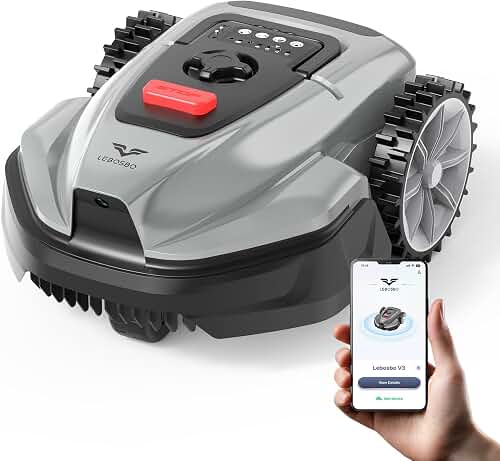
If you keep honey bees and have carved out clover, wildflower, or milkweed strips for native pollinators, the best robot mowers for beekeeper backyards are quiet, schedule-flexible models that respect no-mow zones and cut only the turf you want trimmed. For 2026, look for boundary-wire-free or GPS/RTK navigation, app-controlled exclusion zones around hives and flower strips, sub-60 dB operation, and the ability to mow at dawn or dusk when foragers are inactive. The right machine keeps lawn grass tidy without shredding pollinator habitat, disturbing bee flight paths, or chopping up blooming forbs that your colony depends on.
This guide explains what to look for, how to set up your yard, and the specific features that matter when bees and robot mowers share the same backyard. Whether you have a small urban apiary with a single hive and a 10-foot strip of bee balm, or a homestead with multiple colonies bordered by acres of mixed forage, the principles below will help you choose, configure, and run a robot mower that supports rather than sabotages your pollinator garden.
Why beekeepers need a different robot mower strategy
A typical lawn robot is designed to chew every blade of grass within its boundary. For beekeepers, that default behavior is a problem. Pollinator strips usually contain dandelions, clover, self-heal, creeping thyme, plantain, yarrow, and intentionally seeded wildflowers — exactly the plants a normal mowing schedule would erase. On top of that, foraging bees fly low between hive and forage, and a fast-spinning blade rolling through their flight corridor at 11 a.m. is an unnecessary stressor.
The good news: modern robot mowers are far better suited to coexisting with bees than gas push mowers. They are quieter, lighter (less soil compaction near hive stands), and most importantly, they accept programmable exclusion zones and time-of-day schedules. The best robot mowers for beekeeper backyards turn these features into a real pollinator-friendly system rather than a marketing line.
Key features that matter for bee-friendly mowing
Precise no-mow zones
This is the single most important feature. You need to draw a virtual fence around: the hive footprint plus a 6-to-10-foot buffer, every pollinator strip, any wildflower meadow patch, and the flight path between hives and water sources. GPS- or RTK-guided mowers let you draw these zones in an app. Wire-based mowers require you to lay a physical perimeter loop around each excluded area, which works but takes more weekend labor.
Low operating noise
Bees are not as sensitive to sound as humans, but vibrations and ground disturbance near the hive entrance do agitate guard bees. A mower rated under 60 dB at one meter is generally inaudible from across the yard and produces minimal ground vibration. Most premium 2026 robot mowers fall between 55 and 62 dB, well below the 90 to 100 dB of a gas mower.
Flexible scheduling
Honey bees forage primarily between roughly 60°F and air temperatures above the dew point, with peak activity from mid-morning through late afternoon. A mower that can run only between 5:00 and 7:30 a.m. or after 7:00 p.m. — when most foragers are back inside the hive — lets you trim the lawn without rolling through active flight paths. Look for app-based schedules with sunrise/sunset offsets rather than fixed clock times.
Adjustable cutting height
Set the deck higher than you might for a putting-green lawn. A 2.5-to-3.5-inch cut leaves clover and self-heal flowering in your turf and gives bees an additional forage source between visits to your dedicated strips. Most quality robots adjust from about 0.8 to 2.4 inches; a few go higher.
Rain and dew sensors
Wet grass clumps and clogs the deck, but more importantly, bees cluster near the entrance on damp mornings. A mower that pauses in rain or heavy dew naturally aligns with bee behavior — it stays in the dock when bees are most exposed at the hive.
Small, lightweight chassis
A 20-to-30-pound robot tracking past a hive stand is less disruptive than a 70-pound machine. Smaller models also navigate tight curves around raised beds, hive stands, and flower borders better than wide commercial-class mowers.
For most beekeepers, GPS or RTK wire-free models are the easiest match because pollinator strips often shift year to year as you reseed, expand, or rotate forage species. Wire-based systems are still excellent if your layout is stable — and they tend to cost less. Our robot lawn mower buying guide walks through the broader decision tree if you want to compare navigation types in more depth.
Setting up your yard before the mower arrives
Map your pollinator zones
Walk the yard with graph paper or a satellite photo from your county GIS and mark: hive locations, drinking water, every pollinator strip, fruit-tree drip lines (under-canopy clover often blooms there), and the bees' main flight corridor toward the dominant nectar source. Each of these becomes a no-mow zone or a scheduling consideration.
Build buffer zones
Leave at least 6 feet between any robot path and a hive entrance. Ten feet is better. This gives guards time to evaluate the moving object without launching defensive flights, and it keeps the mower out of the densest part of the flight cone.
Define mowed paths between strips
Pollinator gardening looks best with neatly mowed paths weaving between unmowed strips. Plan these paths to be at least one mower-width wide, with gentle curves the robot can follow without three-point turns. A consistent mown border also signals to neighbors that the wildflower strip is intentional, which matters in HOAs and tight urban lots.
Mark fragile features
Drip irrigation, hive landing boards on the ground, water sources, and seedling areas should all be inside no-mow zones until established. Use small flags or stones the mower's bumper can detect.
Scheduling for bee safety
Bee foraging follows light, temperature, and floral availability. A reasonable default for most temperate climates:
- Spring and fall: Mow after 6:30 p.m. or before 7:00 a.m., when temperatures are below the bees' flight threshold.
- Summer: Mow before sunrise or after sunset. Avoid the 9 a.m. to 6 p.m. peak forage window entirely.
- Hot, dry weeks: Reduce mowing frequency. Clover and self-heal in the lawn become valuable forage during nectar dearths.
- During hive inspections: Suspend mowing for 24 hours before and after to keep guard bees calm.
Apps from major manufacturers now support sunrise and sunset offsets, weather-aware pausing, and seasonal schedule swaps. Set these once and the mower will track the changing day length automatically through the year.
Picking the right model class
Small urban apiary (under 1/4 acre)
You want a compact, quiet, wire-free unit with strong obstacle recognition. Pollinator strips in small yards are often only a few feet wide, so the mower's ability to detect and avoid a 24-inch-wide bed of bee balm matters more than raw cutting speed.
Suburban yard with one or two hives (1/4 to 1/2 acre)
GPS or RTK navigation pays off here because you can carve out multiple zones — front lawn, side path, back lawn around the hive — with different schedules. A mid-range model with two-zone scheduling and rain delay handles this configuration comfortably.
Homestead apiary (1/2 acre to 1 acre)
Larger battery, sturdier wheels for uneven ground, and ideally RTK GPS for the precision needed to thread between meadow strips and lawn. For yards of this size, our large-yard robot mower roundup covers models with the runtime and coverage these properties demand.
Slope or hillside apiaries
Many beekeepers situate hives on south-facing slopes for solar warming. Check the maximum grade your mower handles and confirm it can manage the lawn area without traversing the apiary slope itself. The hills and slopes guide is worth a read before you buy.
Operating tips once the mower is running
Do a slow walk-through of every new zone the first week to confirm the mower respects boundaries. Bees will investigate the machine for a day or two and then largely ignore it. If you notice persistent agitation at the hive entrance, widen the buffer zone by another two or three feet — it almost always solves the problem.
Keep the blades sharp. A clean cut leaves grass healthier and reduces the small bits of plant matter that get flung around, which in turn keeps the apiary tidier. Replace blades on the manufacturer's recommended schedule, usually every 6 to 12 weeks of active use.
Leave a small unmown strip around the hive year-round, not just during bloom. This functions as a windbreak, a moisture buffer, and an emergency forage refuge if the main strips fail.
Frequently Asked Questions
Will a robot mower harm honey bees flying near the ground?
In practice, no. Robot mowers travel at 1.5 to 2.5 mph and bees flying near the ground easily avoid them. The bigger concern is blade contact with bees that have landed on dandelions or clover in the lawn itself. Scheduling mows for early morning or evening, when ground-level foragers are largely absent, essentially eliminates this risk.
Can I program a robot mower to skip my wildflower strip?
Yes. Wire-based mowers handle this via a perimeter loop laid around the strip, and GPS or vision-based mowers handle it with virtual no-mow zones drawn in the app. Both approaches work reliably as long as the boundary is set with a small buffer (about 12 inches) to account for navigation drift.
How close to a beehive can a robot mower safely operate?
Most beekeepers settle on a 6-to-10-foot buffer around the hive entrance, with the wider buffer preferred for defensive colonies or when the mower would pass directly across the flight path. The buffer also protects the hive stand from accidental bumps.
Do robot mowers disturb ground-nesting native bees?
They can if you mow over bare-soil patches where solitary bees like miner bees nest. The cure is the same as for honey bees: identify those patches and add them to your no-mow zones. Ground-nesting bees usually favor sunny, sparsely vegetated patches, which are easy to spot and exclude.
Should I let clover and dandelions grow in the lawn for my bees?
Yes, this is one of the simplest pollinator wins. Raise the cutting height to 3 inches or higher and reduce mow frequency so clover and self-heal can flower between cuts. You will see consistent foraging across the lawn rather than only at the dedicated strips.
Are robot mowers quieter than gas mowers for nearby apiaries?
Significantly. Most robot mowers operate at 55 to 62 dB, compared to 90 to 100 dB for a gas push mower. That is roughly the difference between a conversation and a chainsaw, and it eliminates the vibration spike that agitates bees when a loud mower passes within a few yards of the hive.
What blade height is best for a pollinator-friendly lawn?
Set the deck between 2.5 and 3.5 inches. This keeps grass healthy, suppresses many weeds through shading, and allows low-growing flowering plants like white clover, creeping thyme, and self-heal to bloom between mows. Many premium robots offer this range; check the spec sheet before buying.
Final thoughts
The best robot mowers for beekeeper backyards are not a separate product category — they are the same well-designed, quiet, app-controlled robots reviewed across the rest of this site, configured thoughtfully around your hives and pollinator strips. Pick a mower whose navigation system matches your yard's complexity, draw generous no-mow zones around hives and flowering strips, schedule mowing for early morning or evening, and raise your cutting height. Do those four things and your robot will quietly maintain a tidy lawn while your bees keep their forage, their flight paths, and their peace.
For more on choosing and installing the right model, see our how to choose a robot lawn mower walkthrough and our lawn preparation guide, both of which cover the setup details that matter most when your yard supports a working apiary.