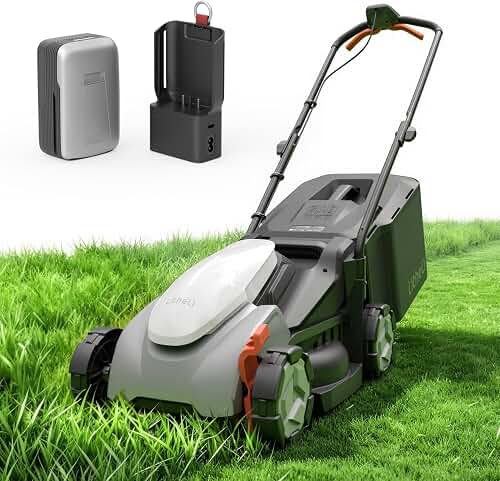
Setting up an Ecovacs Goat O1200 around a septic drain field is straightforward once you understand the constraints. The complete Ecovacs Goat O1200 septic drain field setup involves three core steps: locating and mapping your leach field boundaries before any test run, defining vision-based virtual no-mow zones in the EcovacsHome app to keep the mower away from risers and inspection ports, and raising the cutting deck to 60 mm or higher to protect shallow distribution pipes from scalping. Because the Goat O1200 is a wire-free LiDAR and AI vision mower, you can adjust those zones in minutes—no boundary wire needs trenching through your drain field.
This guide walks through every step, from locating your leach lines using county records to fine-tuning AIVI obstacle settings so the mower never lingers over a saturated trench. We will cover scheduling around rainfall, what to do with risers and septic tank lids, and the most common setup mistakes homeowners make in 2026.
Why Septic Drain Fields Need Special Mower Setup
A septic drain field (also called a leach field) is a buried network of perforated pipes laid in gravel-filled trenches, usually 12 to 36 inches below the surface. The grass on top looks like ordinary lawn, but three issues make robot mowers a unique concern over a leach field:
- Compaction risk. Repeated wheel passes over the same lines compress soil, reducing the field's ability to absorb effluent. A 30-pound mower running daily can produce more compaction over a year than a 600-pound riding mower used twice a month.
- Shallow risers and cleanouts. Most newer systems have inspection ports that protrude one to four inches above grade. These can chip blades, jam wheels, or be sheared off by impact.
- Wet-weather soil damage. After heavy rain, a saturated drain field can sink under load. Tire ruts in the bio-mat layer reduce long-term treatment efficiency.
The good news: the Goat O1200's wire-free design means you never have to bury a guide wire through the trenches—an installation step that traditional perimeter-wire mowers literally cannot do safely. See our guide to the best wire-free robot lawn mowers for more on how these systems navigate without buried boundary cable.
Step 1: Map Your Drain Field Before the First Mow
Before you let the Goat O1200 scout a single foot, you need to know exactly where your drain field begins and ends. Skipping this step is the most common setup error.
Locate your system records
In most U.S. counties, septic permits filed since the late 1980s include an as-built drawing showing tank location, distribution box, and lateral lines. Call your county health department or check their online permit portal. If you bought the home recently, the inspection report likely contains a sketch.
Field-verify with a probe
Maps drift. To confirm, use a 4-foot soil probe to gently feel for the gravel layer above the laterals—you will feel a distinct change in resistance. For PVC laterals, a magnetic locator will not work, but a professional septic locator service runs $150 to $300 and is worth it before any robot mower installation.
Mark the corners with stakes
Drive landscape stakes at each corner of the rectangular field, plus one at each riser and the tank lid. These visual markers help during the Goat O1200's first guided mapping run, where you walk the mower around your yard's perimeter.
Step 2: Run the Initial Mapping Drive Carefully
The Ecovacs Goat O1200 uses its TrueMapping LiDAR plus dual front cameras to build a yard map during the first manual drive. You push it (or guide it from the app) along your perimeter and around obstacles.
For the septic drain field, do not mark the entire field as a no-go yet. Instead, drive the mower along the full property perimeter normally, then drive a tight perimeter around the drain field itself. The app saves this as a sub-zone you can later flag as restricted, partial-mow, or schedule-only.
If this is your first robot mower, our general robot mower installation walkthrough covers the basics of perimeter mapping, base placement, and Wi-Fi pairing that apply to the Goat O1200 as well.
Step 3: Configure Virtual No-Mow Zones
Once mapping is complete, open the EcovacsHome app and tap into your saved map. You will use three zone types:
Restricted zone (full exclusion)
Use restricted zones for the septic tank lid, distribution box cover, and any riser within 18 inches. Draw a circular zone with a 24-inch buffer around each. The mower will treat these as solid obstacles and route around them, even though LiDAR alone might read a flush riser as traversable ground.
Custom cutting zone (drain-field-specific settings)
For the main drain field rectangle, create a custom zone with these settings:
- Cutting height: 60-70 mm (the highest comfortable setting)
- Cutting pattern: alternating direction every session, not parallel-only
- Mowing frequency: every 3 to 4 days instead of daily
- Edge mode: disabled inside this zone, since edge mode adds extra wheel passes near boundaries
Schedule restriction
Set this zone to mow only between 10 a.m. and 4 p.m. so morning dew has evaporated. Wet soil compacts up to four times more than dry soil under the same wheel load.
Step 4: Adjust AIVI Obstacle Detection Sensitivity
The Goat O1200's AIVI 3D obstacle avoidance is tuned for typical yard objects: toys, pet waste, garden hoses. In the EcovacsHome app, you can raise sensitivity to "High" within the drain field zone. This makes the mower stop and reroute around lower-profile objects like a cleanout cap that has settled to near-grade level, or a small heaved patch after a freeze-thaw cycle.
One caveat: high sensitivity slows the mower and increases skipped patches. That tradeoff is acceptable over a drain field but would frustrate you across the whole yard, which is exactly why per-zone tuning matters.
Step 5: Set Rain-Aware Scheduling
The Goat O1200 has a built-in rain sensor that pauses mowing when precipitation is detected. For drain field protection, you should go further:
- In the app, enable a "Rain Delay" of 24 to 48 hours after detected rainfall.
- For systems in clay-heavy soil, extend this to 72 hours.
- Never schedule the drain-field zone for the first session after a multi-day rain event—run only the rest of the yard until the field dries.
If your area gets frequent storms, manually triggering the drain field zone only during dry stretches is the safest pattern.
Step 6: Re-Map After Pumping or Repairs
Septic pumping every 3 to 5 years often leaves surface disturbance: tank lids reseated slightly higher, soil heaved around an excavation, or new risers added. After any service visit, re-run the manual perimeter drive for the drain field sub-zone. Five minutes of remapping prevents the mower from dropping a wheel into a freshly-backfilled trench. Our lawn preparation guide covers similar ground-leveling steps that apply equally well to post-septic-service touch-ups.
Common Setup Mistakes Over Septic Systems
These five mistakes account for most failed Ecovacs Goat O1200 septic drain field setup attempts I've seen homeowners post about:
- Marking the whole field as no-mow. This forces you to push-mow weekly, defeating the purpose of automation. Use partial-mow zones with adjusted settings instead.
- Leaving cut height at factory default. The 30 mm default is too short and exposes shallow trenches to scalping during dry spells.
- Letting the mower dock near a riser. Place the charging base on the opposite side of the yard so the daily return path does not cross the field.
- Ignoring corner cuts. Drain fields are often laid in a rectangle with a 6-inch grass border. The Goat's edge mode can over-trim this border—disable it specifically in this zone.
- Skipping the after-rain delay. A 30-pound wheeled robot on saturated turf can leave permanent ruts within one session.
Comparing the Goat O1200 to Its Sibling for Drain-Field Use
If you are still choosing between the Goat O1200 and the older Goat G1, the O1200's full LiDAR plus AIVI 3D stack makes it the more drain-field-friendly choice. The G1 relies on beacons and a less granular zone editor, which means more tuning to keep it off the field. For a full comparison see our Ecovacs Goat G1 review—the short version is that the G1 will work, but you will spend more time fiddling with beacon placement.
Final Ecovacs Goat O1200 Septic Drain Field Setup Checklist
Before you walk away from your first successful drain-field session, confirm all of the following:
- Drain field corners, risers, and tank lid identified and physically staked
- Restricted no-go zones drawn with 24-inch buffers around each protrusion
- Custom cutting zone covers the drain field rectangle at 60-70 mm height
- Mowing frequency reduced to every 3 to 4 days within that zone
- Rain delay extended to 24-72 hours depending on soil type
- Charging base sited off the drain field, on the opposite end of the yard
- AIVI sensitivity set to High for the drain field zone only
Frequently Asked Questions
Can a robot mower damage a septic drain field?
Yes, if used incorrectly. The two real risks are soil compaction from repeated wheel paths and physical contact with shallow risers or pipes. A correctly configured Goat O1200 with high cut height, low frequency, and dry-weather scheduling poses minimal risk—far less than push or riding mowers because the per-pass weight is much lower.
How tall should I keep grass over a leach field with a robot mower?
Keep grass between 3 and 4 inches (75 to 100 mm). Taller grass develops a deeper root system that helps wick moisture from the field and improves treatment. Set the Goat O1200 to 60-70 mm in the drain field zone and let it trim only the top inch each pass.
Will the Goat O1200's wheels leave ruts on a drain field?
Not under dry conditions with the recommended 3 to 4 day frequency. Ruts form when wet soil meets repeated load. The Goat's roughly 21-pound class is light, but rain delays and a varied cutting pattern that avoids the same wheel track each session keep the surface intact.
How do I keep the mower from running over septic risers?
Draw a restricted (no-go) zone with at least a 24-inch buffer around each riser, cleanout, and tank lid in the EcovacsHome app. Combine this with raised AIVI sensitivity so the mower will still stop even if a riser settles below the map's recorded position.
Can I install the charging base on my drain field?
No. The base requires a level, dry spot with year-round access. Even if your drain field looks like the flattest part of the yard, installing the base there means the mower returns to and departs from that exact patch dozens of times a week, creating a guaranteed compaction zone. Place it on the opposite end of the yard near power.
What cutting frequency is safest for a septic drain field?
Every 3 to 4 days during the growing season, dropping to weekly or less in late summer. Daily mowing—the default for many wire-free robots—is overkill over a leach field and accelerates compaction without meaningful turf benefit.
Do I need to call my septic service before installing a robot mower?
Not for installation, but ask for an as-built drawing if you do not already have one, and request that risers be marked with brightly colored caps. Most septic companies will do this for free during a routine pump-out, and it makes the Goat O1200's vision system far more reliable at detecting them.