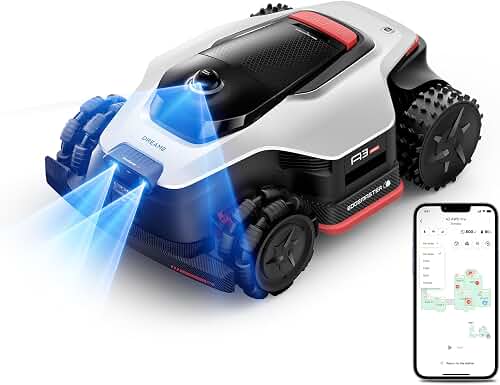
Finding the best robot mowers for Bahia grass snake-prone Florida yards means balancing three demanding factors at once: coarse, fast-growing Bahia turf that throws up tough seed stalks every few days, relentless heat and afternoon thunderstorms, and the very real risk of venomous snakes hiding in any patch of grass taller than your ankle. The ideal machine cuts daily at 3 to 4 inches, shrugs off surprise downpours, navigates around palmetto roots and live oak buttresses, and keeps the lawn short enough that copperheads, water moccasins, coral snakes, and rattlesnakes have nowhere to coil up and ambush. This 2026 buyer's guide breaks down exactly what to look for, which features matter most for Florida's worst-in-class lawn conditions, and how to prepare your property so the mower works with you instead of stalling out on Bahia seed heads or wandering into a snake's hiding spot.
Why Bahia Grass Is the Hardest Test for a Robot Mower
Pensacola, Argentine, and common Bahia (Paspalum notatum) dominate central and north Florida lawns because they tolerate sandy soil, drought, and pests that would wipe out St. Augustine or Zoysia. The trade-off is brutal on automated mowers. Bahia grows in coarse, low-density clumps with thick rhizomes and notoriously tough Y-shaped seed stalks that can shoot up 12 inches in 48 hours during the summer rainy season. Those stalks have the tensile strength of light fishing line; cheap razor-blade mowers either snap, bend, or simply skip over them.
A robot mower that succeeds on Bahia needs three things most consumer models lack: serious cutting torque, a high maximum deck height of at least 4 inches, and a willingness to run every single day. Mulch-style razor blades work fine if you mow before stalks lignify, but only if the machine actually goes out daily. Skip 72 hours during a summer storm and you are back to manual reset mowing with a gas trimmer.
How Daily Mowing Deters Snakes
The University of Florida IFAS extension repeats one piece of snake-safety advice more than any other: keep grass short and edges trimmed. Snakes are ambush predators that rely on concealment. A lawn maintained at 3 to 4 inches and mowed daily eliminates the cool, shaded microclimate where pygmy rattlers and cottonmouths prefer to coil during hot afternoons. It also exposes them to hawks and other predators, which encourages snakes to move on rather than den near your house.
A robot mower beats a weekly riding-mower routine for snake deterrence specifically because of frequency. Going out for 90 minutes a day, seven days a week, means no patch of your yard ever grows above the snake-comfort threshold. The constant low-level vibration also encourages snakes (and the rodents that attract them) to relocate to neighboring brush. For Florida homeowners who want to walk barefoot to the mailbox without scanning the grass like a minesweeper, the snake-deterrence value alone often justifies the cost of a quality robot mower.
Key Features to Prioritize for Florida Bahia Lawns
Maximum Cut Height of 4 Inches or More
This is non-negotiable. Bahia thrives between 3 and 4 inches; cut shorter and you scalp the crowns, opening the door to dollarweed, sandspurs, and bare patches that bake in the sun. Many entry-level robot mowers top out at 2.4 inches, which is fine for European fescue but disastrous for Bahia. Look for a maximum deck setting of 100 mm (3.9 inches) or higher.
High-Torque Cutting Disk
Bahia seed stalks demand torque, not just blade speed. Pivoting razor blades from premium brands like Husqvarna and Segway Navimow handle them better than the fixed star-blade decks on some budget models, because the pivoting blades absorb impact instead of stalling the motor. If you can find a model that lists "reinforced cutting disk" or "3-blade pivoting system," you are on the right track.
IPX5 or Higher Water Resistance
Florida summer thunderstorms arrive without warning. Any robot mower you consider needs to withstand a sudden 15-minute downpour without electrical failure. IPX5 is the practical minimum; IPX6 is better. Also check that the charging dock is rated for outdoor exposure or plan to build a small rain shelter.
Rain Sensor and Smart Scheduling
Wet Bahia clumps and clogs the underside of the deck, leaving stripes and dulling blades quickly. A rain sensor that pauses the mowing schedule and returns the mower to the dock saves you maintenance and prevents lawn damage. Pair this with app-based scheduling so the mower runs early morning or late afternoon when snakes are less active and the grass is dry from dew.
GPS or RTK Navigation (Wire-Free)
Traditional perimeter-wire systems work, but in snake country there is a hidden problem: the wire trench creates a shallow groove around your yard that fire ants love, and over time gophers, armadillos, and even snakes themselves can disturb the wire. RTK-GPS systems like the Segway Navimow line eliminate the wire entirely. You define the boundary in an app, the mower navigates by satellite, and there is nothing buried to repair after a hurricane.
Obstacle Avoidance for Wildlife
Camera- or LIDAR-equipped models can identify and avoid snakes, toads, gopher tortoises (a protected species in Florida), and other wildlife rather than running them over. This is both a humane consideration and a practical one — a chopped-up snake on your blades is a biohazard nobody wants to clean.
Which Robot Mower Categories Work Best
No single model dominates the Florida-Bahia-snake-country use case, so think in categories rather than brand names. For most snake-prone Florida properties, three categories deliver:
Premium wire-based mowers from Husqvarna (the Automower 430X and 450X lines) cut at up to 2.4 inches stock, but you can raise the deck physically with aftermarket wheel spacers, and their pivoting razor blades chew through Bahia seed stalks better than almost anything else on the market. They are the gold standard for high-traffic, multi-zone Florida lawns, especially properties over half an acre with mixed grass types.
RTK-GPS wire-free mowers like the Segway Navimow H-series and the EcoFlow Blade are ideal if you have a single open zone and want zero buried wire. They cut up to 3.5 inches and avoid the snake-attracting trench problem. The H-series in particular has a vision-based obstacle avoidance system that detects animals.
Budget perimeter-wire mowers like the Worx Landroid M and Gardena Sileno work on smaller Florida yards under a quarter acre, especially if Bahia is only a portion of the lawn. The Worx float deck handles uneven terrain reasonably well, though you will be replacing blades more often than on Husqvarna.
For a deeper category-by-category breakdown, see our full guide to the best robot lawn mowers and the dedicated large-yard rankings, which call out which models actually scale to the half-acre and one-acre Florida properties typical of Bahia country.
Yard Prep for Snake-Safe Robot Mowing
The mower is only half the battle. Florida properties usually need three preparation steps before the first autonomous run. First, walk the entire perimeter at dawn and remove every brush pile, palm frond, board, and piece of debris within ten feet of the lawn. These are snake hides, full stop. Second, identify and protect the gopher tortoise burrows if you have any — Florida law protects the species and a robot mower can easily fall into a burrow entrance.
Third, edge aggressively. Bahia spreads by rhizome and will invade flower beds, driveways, and AC pad concrete cracks within weeks. Install hard edging (steel, concrete, or composite) at least 4 inches deep to give the mower a clean boundary and to eliminate the tall grass strip along beds where snakes love to travel. Our lawn preparation walkthrough covers the full sequence for new robot owners.
Maintenance in Florida's Humidity
Florida humidity destroys electronics faster than almost anywhere else in the continental US. Even an IPX6-rated mower benefits from a covered charging dock, ideally with a small solar-powered exhaust fan to keep moisture moving. Check and replace the cutting blades every 4 to 6 weeks during peak Bahia season (April through October); dull blades tear the grass tips, which then turn brown and attract fungal disease in the humidity.
Wipe down the underside of the deck weekly. Bahia clippings combined with sandy Florida soil form a concrete-like crust that holds moisture against the chassis. Use a plastic scraper, never a metal one, and check the bearings for play. Also inspect the perimeter wire (if applicable) after every named storm — wind-blown debris and root upheaval from saturated soil are the two most common causes of mid-summer wire breaks.
Battery health matters too. Florida's heat ages lithium cells faster than the temperate-climate manufacturer specs assume. Plan on roughly 4 years of useful battery life rather than the marketing-claim 6, and budget for replacement.
Should You Buy at All If Snakes Are a Major Concern?
Honestly, yes — but with one caveat. A robot mower reduces snake encounters around the lawn itself by keeping grass uniformly short. It does not address snakes in your landscape beds, under your AC pad, in your garage, or in palmetto thickets. Combine the robot mower with broader snake-deterrence practices: keep mulch beds thin, store firewood off the ground and away from the house, control rodents, and seal foundation gaps. The robot handles the lawn 24/7 so you can focus your manual time on the higher-risk zones.
Frequently Asked Questions
Will a robot mower actually keep snakes out of my Florida yard?
It will dramatically reduce snake activity in the open lawn area by eliminating the tall-grass concealment they need. It will not keep snakes out of mulch beds, brush piles, or palmetto thickets. Think of daily robot mowing as one layer of a multi-layer snake-deterrence plan that also includes rodent control, debris removal, and tight foundation sealing.
What is the best cut height for Bahia grass with a robot mower?
Set the deck between 3.5 and 4 inches. Cutting shorter scalps the crowns and invites weeds; cutting taller defeats the snake-deterrence purpose. Because Bahia grows so fast in summer, the robot should run daily so it only removes the top third of the blade per pass — that is the standard turfgrass rule for healthy mowing.
Can a robot mower cut Bahia seed stalks?
Yes, but only if you mow daily and use a mower with pivoting razor blades or a high-torque cutting disk. Once Bahia seed stalks reach 6 inches and lignify, most consumer robot mowers will skip over them or stall. Daily mowing prevents the stalks from ever reaching that point. If you fall behind during vacation or a hurricane week, plan on a manual reset pass with a gas mower before re-engaging the robot.
Will a wire-free RTK mower work better than a perimeter-wire mower in Florida?
For most snake-prone Florida properties, yes. The wire trench attracts fire ants and can be disturbed by armadillos, gophers, and root expansion. RTK-GPS systems also let you reshape boundaries in the app without digging. The trade-off is sky-view requirements: heavy live oak canopy can block satellite signals, and in those cases a wired Husqvarna may actually be more reliable.
Do robot mowers damage gopher tortoises or other Florida wildlife?
They can, especially smaller animals and amphibians active at night. Always disable nighttime mowing — set the schedule for daylight hours only — and choose a model with camera or LIDAR obstacle avoidance if you have wildlife visitors. Flag and exclude any gopher tortoise burrows from the mowing zone; they are a protected species and harming one is a state offense.
How does Florida humidity affect robot mower lifespan?
Expect roughly 30 percent shorter service life on electronics and batteries compared to manufacturer specs from temperate-climate testing. Use a covered, ventilated charging dock, inspect for corrosion quarterly, and rinse sandy clippings off the chassis weekly. With that maintenance routine, a premium mower will easily last 6 to 8 years even in Pensacola or Tampa conditions.
What size mower do I need for a typical Florida half-acre Bahia lawn?
Look for a model rated for at least 0.6 acres in the spec sheet, with a battery runtime of 90 minutes or more. Manufacturers consistently overstate coverage, so add a 25 percent buffer over your actual square footage. For irregular Florida lots with multiple zones around the house, a model that supports passage-corridor mapping or multi-zone scheduling is worth the premium.