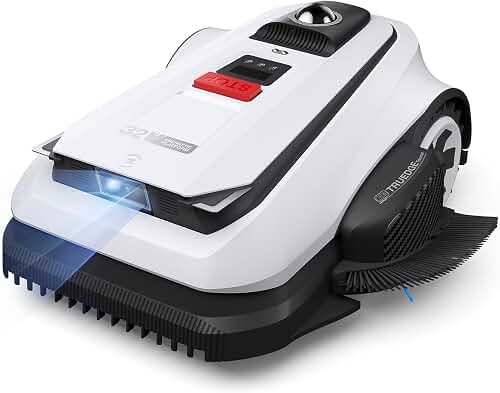
If you want a truly chemical-free yard, the best robot mowers for organic lawn care no pesticide approach is one of the most powerful tools you can buy. By trimming a tiny sliver off each grass blade daily and dropping fine mulch clippings back onto the soil, a robot mower feeds your turf with free organic nitrogen, encourages deeper root systems, and crowds out broadleaf weeds without a single drop of herbicide or synthetic fertilizer. There are no two-stroke emissions, no spilled gasoline, and no soil-compacting wheel ruts from a heavy gas mower. This 2026 buyer's guide explains exactly what to look for in a robot mower built for organic, pesticide-free lawn care, which features actually matter for soil health, and how to set the machine up so weeds disappear on their own.
Why robot mowers are a natural fit for organic lawns
Conventional lawn care relies on a vicious cycle: weekly mowing scalps the grass, the stressed turf thins out, weeds invade, and homeowners reach for selective herbicides like 2,4-D, dicamba, or glyphosate to fight back. Organic lawn care breaks that cycle by keeping the grass dense, tall, and healthy enough to outcompete weeds on its own. Robot mowers happen to be almost perfectly engineered for that strategy.
Where a gas mower visits once a week and removes a third or more of the leaf blade in a single pass, a robot mower visits the lawn five to seven days a week and removes only a few millimeters at a time. That tiny-and-often approach keeps the grass within its ideal photosynthetic window, so it never has to redirect energy from root growth into emergency regrowth. The result, documented by university turf programs, is a denser canopy that shades the soil, lowers soil temperature, conserves moisture, and physically prevents weed seeds from germinating. In a well-tuned organic system, the mower itself becomes the herbicide.
The clippings story matters just as much. A typical lawn produces roughly one pound of nitrogen per thousand square feet per year in grass clippings alone. A robot mower's micro-clippings are so small they fall straight to the soil surface, never thatch, and decompose within days. That mulch returns nitrogen, potassium, and trace minerals back to the root zone, often eliminating the need for synthetic fertilizer entirely. For a chemical-free lawn, this is the closest thing to a closed nutrient loop you can run on residential turf.
What to look for in the best robot mowers for organic lawn care no pesticide use
Not every robot mower is equally well suited to an organic program. When you are skipping pesticides on purpose, the machine has to do more of the heavy lifting — daily cutting, low ground pressure, flexible scheduling, and a cut height that supports tall-grass weed suppression. Here are the features that genuinely move the needle.
A tall maximum cutting height
This is the single most important specification for an organic lawn. Cool-season grasses like fescue, ryegrass, and Kentucky bluegrass suppress weeds best when mowed between 3 and 4 inches. Warm-season grasses like Bermuda and zoysia have lower ideal heights, but even there, the upper end of the range is the weed-fighting sweet spot. Many entry-level robot mowers top out at 2.4 inches — too short for organic management of cool-season turf. Look for a maximum cut height of at least 60 mm (about 2.4 inches), and ideally 70 mm or higher. Husqvarna Automower, Worx Landroid, and Gardena Sileno models can typically reach this range, while some budget units cannot.
Daily scheduling and rain sensors
An organic lawn benefits from frequent, short cuts. A mower that only runs three days a week is doing half the job of one that runs daily. A built-in rain sensor matters too — wet clippings clump, smother the canopy, and create fungal pressure that, on a chemical lawn, would be "solved" with a fungicide. On an organic lawn, you simply pause the mower when it rains and resume when the blades are dry.
Low ground pressure and small wheels with light treads
Heavy gas mowers compact soil over time, and compacted soil favors weeds like crabgrass, plantain, and dandelion that thrive in low-oxygen root zones. Robot mowers typically weigh 15 to 30 pounds, distribute that weight on four wheels, and follow random paths rather than the same stripes every week. That alone reduces compaction dramatically. For very soft soils, look for models with knobby but narrow tires rather than aggressive paddle treads.
Sharp, replaceable razor blades
Most robot mowers use small free-swinging razor blades rather than a single rigid blade. They cut cleanly when sharp and tear the grass when dull — and a torn leaf blade is an open wound that invites disease, which then tempts a homeowner toward fungicides. Choose a model with cheap, easy-to-swap blade sets (often three to nine plastic-mounted razors) and plan to replace them every four to eight weeks during the growing season. This is the single cheapest insurance policy in organic turf care.
Wire-free or app-defined boundaries (optional but helpful)
Traditional robot mowers use a buried perimeter wire. Newer wire-free models use GPS-RTK, vision, or beacon systems to define the mowing area through an app. Wire-free models make it easier to expand mowed zones, carve out pollinator patches of clover and self-heal, or temporarily exclude a section you've overseeded. If you plan to actively manage your lawn as a habitat rather than a monoculture, a wire-free system is worth the premium.
Cutting strategy: how to turn a robot mower into a weed-control system
Owning the right hardware is half the battle. The other half is dialing in a mowing strategy that actively suppresses weeds without any chemical input. Start by setting the cutting height to the upper end of your grass species' tolerance — for most northern lawns, that is 3.5 to 4 inches measured at the blade tip. Tall grass shades the soil, drops soil temperature by as much as ten degrees Fahrenheit, and prevents the light triggers that crabgrass and other annual weed seeds need to germinate.
Next, schedule the mower to run daily, including weekends. Aim to remove no more than the top 5 to 10 percent of the leaf blade per visit. If your mower offers an "eco" or "adaptive" mode that automatically extends runtimes during the spring flush and shortens them in summer dormancy, enable it. The goal is to keep the lawn at a constant height through the entire growing season, never letting it spike up after rain and never scalping it back down.
Finally, accept some clover. White Dutch clover (Trifolium repens) is not a weed in an organic system — it is a nitrogen-fixing companion plant that pulls free fertilizer out of the atmosphere and feeds the surrounding grass. Robot mowers handle clover beautifully because their daily cutting keeps the flowers from going to seed while leaving the nitrogen-fixing roots intact. A 15 to 25 percent clover stand can eliminate the need for fertilizer entirely.
Battery, emissions, and the carbon math
A typical gas push mower emits as much hourly pollution as eleven new cars, according to EPA estimates. A robot mower runs on lithium-ion batteries charging from your home grid, often at well under 50 watts of average draw. Even on a coal-heavy grid, the lifetime emissions are a small fraction of a comparable gas mower's. On a solar-powered home, they are effectively zero. For homeowners pursuing organic lawn care as part of a broader sustainability goal, the emissions delta is a meaningful additional benefit.
Battery longevity matters too. Look for mowers that allow user-replaceable batteries and that publish a clear battery service interval (typically three to five years). A mower whose battery cannot be replaced becomes electronic waste at the end of its pack life, undoing some of the environmental case for owning it in the first place.
Pairing your robot mower with an organic lawn program
The mower is the daily workhorse, but a complete organic program has a few more moving parts. In spring, top-dress thin spots with quarter-inch of screened compost and overseed with a turf-type tall fescue or perennial ryegrass blend appropriate to your region. Compost adds biology, not just nutrients, and a diverse microbial community is what makes pesticides unnecessary in the first place.
Through the season, water deeply but infrequently — one inch per week, delivered in one or two sessions, encourages deep roots. Frequent shallow watering favors weed seedlings and shallow-rooted turf that needs chemicals to survive summer stress. In fall, apply another quarter inch of compost and overseed any remaining thin spots. Your robot mower will continue chipping away at weeds the entire time, and by the second full season most homeowners notice the dandelions and crabgrass have simply faded out.
If you want to go a step further, set aside a small no-mow zone where the robot mower is excluded — even 50 to 100 square feet of taller meadow grasses and wildflowers provides habitat for pollinators and beneficial predatory insects that keep pest pressure low across the rest of the lawn. Wire-free mowers make this trivial; wire-based mowers can do it with an internal exclusion loop.
Setting up for organic success
Before the mower arrives, mow the lawn once with a conventional mower to a uniform 3-inch height, rake out heavy thatch, and fill any holes a robot wheel could catch on. Pick up sticks, pine cones, and dog toys — daily debris patrol becomes a five-minute habit. Our guide to preparing a lawn for a robot mower walks through this in detail, and our installation guide covers boundary wire and base station placement. If you are still comparison shopping, the full buying guide and our overall best robot mowers roundup are good next steps.
Frequently Asked Questions
Can a robot mower really replace herbicides on my lawn?
In most cases, yes — but it takes one to two full growing seasons. The combination of daily cutting at a tall height, mulched clippings returning nitrogen, and a denser canopy shading the soil suppresses the majority of annual broadleaf weeds within the first year. Perennial weeds like dandelion and plantain take longer to fade because their taproots store energy. Hand-pulling those during the transition year speeds the process considerably.
What is the best cutting height for organic weed suppression?
For cool-season grasses (fescue, ryegrass, Kentucky bluegrass), set the mower at 3.5 to 4 inches. For warm-season grasses, mow at the upper end of the species' tolerance — about 1.5 to 2.5 inches for Bermuda and zoysia, and 3 to 4 inches for St. Augustine. Tall grass shades the soil enough to block the light cues crabgrass and other annual weeds need to germinate, which is the foundation of chemical-free weed control.
Do robot mower clippings replace fertilizer entirely?
For a moderately healthy lawn, returned clippings supply roughly one pound of nitrogen per thousand square feet per year, which is about a third to half of what a typical lawn needs. Adding 15 to 25 percent white clover into the turf, plus a quarter-inch of compost top-dressing each spring and fall, generally closes the remaining gap without any synthetic fertilizer. For very sandy or nutrient-poor soils, an annual application of organic alfalfa meal or feather meal may still be helpful.
Will a robot mower damage earthworms or beneficial insects?
Robot mowers are far gentler on soil biology than gas mowers. Their light weight reduces compaction (earthworms hate compacted soil), they emit no exhaust, and their tall, frequent cutting leaves more leaf surface for predatory insects to shelter on. The blades are small and high enough that ground-dwelling beetles and earthworms are not directly affected. The biggest impact on beneficial insects in a lawn is pesticide use itself — which an organic program eliminates.
How does an organic robot-mowed lawn compare to a conventional one in dry weather?
Generally better. Tall grass with deep roots — the kind a daily-cutting robot mower encourages — accesses soil moisture six to twelve inches deep, while short, chemically maintained turf often roots only two to four inches deep. Organic lawns also benefit from higher soil organic matter, which holds more water per square foot. During heatwaves, an organic robot-mowed lawn will typically go dormant later and green up faster than a comparable conventionally managed lawn.
Can I use a robot mower if I have pets and want to avoid lawn chemicals for their safety?
Yes, and this is one of the most common reasons homeowners switch to robot mowers. Eliminating herbicide and pesticide applications means pets can roll, dig, and chew grass without exposure to 2,4-D, glyphosate, or pyrethroid insecticides. Schedule the mower to run when pets are indoors, and supervise initial sessions until pets learn to ignore it. Most dogs adjust within a week or two.
Do I need to overseed if my robot mower is mulching clippings every day?
Overseeding once a year in early fall (for cool-season grasses) or late spring (for warm-season grasses) is still recommended for at least the first three seasons of an organic program. Overseeding introduces newer, more disease-resistant cultivars and fills in any thin spots before weeds can colonize them. Once the lawn reaches full density and the soil biology is mature, overseeding can drop to every two or three years.